|
|
 |
Dusted Reviews
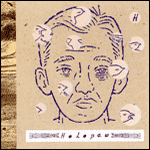
Artist: Holopaw Album: Holopaw Label: Sub Pop Review date: Apr. 23, 2003 |
|
|
|
|
Acoustic Melancholy, Echoes, and Static
Last year’s Ugly Casanova record, made by Isaac Brock and a host of cohorts, including producer Brian Deck and Holopaw singer John Orth, suggested a new kind of rock music, a sound where Eno-esque electronics collided with the blues, indie despair, and harsh white noise. It could be the new folk music, a holistic, populist absorption of various strands which have either never met or mingled badly in previous attempts. The Casanova album was notable for its successful pooling of these rather disparate elements, and in sustaining its experimental sense while creating memorable, rather beautiful songs. Orth, a member of the five-strong Florida band Holopaw, co-wrote many of the Ugly Casanova tracks, and it becomes clear on Holopaw’s self-titled debut that a fair amount of its musical direction was inspired by Orth’s sensibility, as well as Deck’s spacey production.
Deck is onhand again for Holopaw’s record, and his prints are everywhere: in the collision of analog elements (pedal steel, acoustic guitar, organic vocals) and his now-trademark digital layering of sound, including computerized bleeps and squeaks in even the most stripped-down, acoustic tracks. It’s impossible not to mention Deck and Brock when discussing Holopaw, not only because of a shared pedigree, but because the sound of Orth’s band could quite possibly come off as derivative if one were unaware of the connection. And indeed, on a first listen, Holopaw comes off a bit like a collision of Oldham-style country and Isaac Brock’s quieter, more reflective moments. That similarity doesn’t entirely recede, but it’s also clear that Holopaw has a strong identity, as well as a gift for taking country’s basic elements and melting them down into something a bit more surreal and dark.
The songs are divided into two styles: lonely, solo acoustic tracks, and gently propulsive, bass-lead country numbers, which sound faintly like Jim O’Rourke channeling Harvest-era Neil Young. Enjoyment of this record probably depends on your feelings about Deck’s production sensibility. Those who thought Modest Mouse’s The Moon and Antarctica was "the American OK Computer" will probably enjoy Holopaw’s icy blips and squiggles just fine; those who find Deck’s digital trickery cold and heavy-handed might find his work on this album intrusive, although it’s much more subdued than his production with Brock. Like Rebecca Gates’ Ruby Series (also made with Deck), Holopaw’s album uses its electronics to subtly enhance or subvert its live instrumentation. For the most part, it works, especially on the opener "Abraham Lincoln", which melds Orth’s acoustic guitar and lonely-sounding vocals with sounds that resemble radio static or distant echoes. It adds an odd sense of dislocation, one that persists through most of the record, although Holopaw aren’t tempted towards the kind of full-blown, impenetrable weirdness that Brock sometimes indulges in.
Much of this record is quietly beautiful, and its laments gather weight with repeated listens. The details of production pay off in a greater richness as the record settles, as little sounds leak out and connect with bits of imagery, making connections not immediately apparent. There are also some real heartbreakers here, in the grand tradition of country music, including "Hoover", a sad, sad song about a lonely cowboy whose only meaningful relationships are with his horses. It’s a beautiful song that lingers for the rest of the album – songs full of fractured loneliness and unwitnessed defeat. As with most good records, it’s the small elements of the album that pay off, be they resonant images in the lyrics or arresting synth tones. Holopaw haven’t fully realized their potential to make the most of these details, but this record builds admirably on Orth’s past collaborations, pushing him closer to a minor reinvention of country music, or at least a reinvigoration.
By Jason Dungan
|




 Oh Glory, Oh Wilderness