|
|
 |
Dusted Reviews
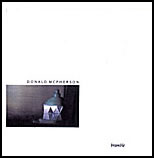
Artist: Donald McPherson Album: Bramble Label: Metonymic Review date: Mar. 31, 2002 |
|
|
|
|
*Note:* This album was released in New Zealand in September 2001, but has received suprisingly little press in the states, hence the review. You can find it in the U.S. at Other Music.
Recorded improvisational music acts as both trick and treat. Listening to live recordings of Derek Bailey or Evan Parker for the first time is often troublesome and a task to fully comprehend. The subtle intricacies of improvisation rarely reveal themselves after one listen, which is somewhat paradoxical given a large portion of improv is recorded live in concert. The real-time experience of Bailey’s guitar or Parker’s reeds thrives more on the visceral than the cerebral, especially to listeners who may not have an extensive background in improvisational digestion. The experience recorded, however, allows for a more intimate, full-bodied interaction, as well as providing these unscripted sounds a footnote in history.
Donald McPherson’s guitar improv was not performed in a club, in front of awe-struck aficionados, but operates on a similar level. Bramble, his debut full-length recording, was recorded straight to cassette in his bedrooms, (first Ravensbourne and then Dunedin, New Zealand) sporadically between 1995 and 2000. Utilizing steel-string, nylon, electric and an array of complementary material, McPherson’s exploratory plucking seems, on first listen, sprawling and distant, the lack of explicit direction charming, but at times aimless. Yet, over time, McPherson’s patience metamorphoses into consideration and his improvisation takes on a deliberate appeal. Thanks to the wonder of recorded music, Bramble’s improv pieces become fully developed songs.
McPherson’s hint of composition may have something to do with his background in classical music. The native New Zealander has been playing guitar since he was 12 and studied at the Otago Art School in the late ’80s with fellow Dunedin musicians, the Sandoz Lab Technicians. In the mid ’90s, he released a series of lathe-cut ‘folk’ records, few of which still exist due to limited (and faulty) pressings.
Bramble’s delicate, but strong personality transmits a certain folk aesthetic. The title track, the most energetic piece on the album, conjures up visions of gallantry and green sleeves. McPherson’s active upper register plucking, complemented by occasional bass buzzes, explores recognizable phrases with a lo-fi bravado. The nylon strings ring with the warmth of elasticity and the concealed melody tempts repeated listens.
McPherson’s array of recordings give the album a strong sense of progression and development. The timespan involved may also lend to Bramble’s distinctness; each piece stands unique from the rest, despite the overriding theme of solo guitar improv. Yet, while each piece was recorded in singular fashion, the collection works as an album. The opening steel-string rays of light on “At the Crack” is an ideal beginning, sparsely depicting the magic of those first few steps. “Bramble” and “A Cartographer’s Dream” both somewhat lengthy nylon-guitar improv, sit at the center of the album, showcasing McPherson’s ability to extract emotion from his instrument without reverting to preconceived formulas. When McPherson combines the different timbres of steel and nylon on “Mercurial,” the album reaches a new peak in intensity, the incessant strum building on the tension of the two materials.
Some of Bramble’s highlights are not technically improv. Four-track constructions “Mud Order,” and “The Chrysalid” both add an interesting ensemble-esque etc. to the album’s solo improv description, while “South-South East” uses a computer drone as a backdrop and is somewhat similar to Rafael Toral’s work on Violence of Discovery and Calm of Acceptance, though the former is more interested in folk musings than modulation.
Bramble is an apt name for such a record. From a distance, the briar patch is intimidating and impenetrable, but when examined on a closer level, paths steadily manifest themselves throughout the flora. McPherson’s work may be a trial to traverse at first—keep listening. Eventually McPherson’s home recordings will be worth their wait in gold.
By Otis Hart
|





 View all articles by Otis Hart