




|
|
|
|
|
|
|
|
|
|
||||||
| |||||
|
|
||||||||||||||||||||||||||||||||||||||||||
|
|
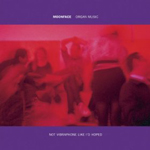
Spencer Krug first tried out the Moonface concept – and name – a couple of years ago, for a 20-minute, one-track EP called Dreamland: Marimba and Shit-Drums, an odd, intermittently striking combination of polyrhythmic tonal percussion, lo-fi drumming and Krug’s fluttery, indie-evocative voice. His second entry in the Moonface catalog is, in many ways, a far more conventional experiment, substituting (to his evident chagrin, per the title) the more customary accompaniments of organ and programmed beats for malleted percussion.
This is a significant shift. While you can, at times, hear the organ’s repeated, staccato riffs as drummed melody, the overall effect is far more melodic and sustained. “Return to the Violence of the Ocean Floor,” for instance, begins in a clipped pointillism of organ sounds that might as well be played on a vibraphone as a keyboard. Yet only a minute or so goes by before richer, more fluid tones creep in, slathering over the plink and chirp and tweet with mysterious undertones.
There is, too, a sheen of futurism in the drum machine and organ, which plays effectively against Krug’s very organic voice. He’s a romantic in the old school, one-man-against-a-raging-world sense (and also, separately, in the more conventional hearts-and-flowers sense), his voice burly and raw with feeling. In “Whale Song (Song Instead of a Kiss),” his singing bleeds like an open wound all over pristine, techno-gleaming sonic spaces. Cracked, sighing, moaning, fluting into anguished little trills, Krug’s voice becomes the only human element in a glass-and-steel palace.
Five long tracks make up Organ Music, the shortest just over six and a half minutes, the longer two just over eight minutes. Krug’s trick is to balance hook and vamp, building each song on an ear-sticky tune, then extending it past pop length through rhythmic repetition. The effect is feverish and tantalizing, as shards of clear melody flit in and out of cloudy drones over robotically reiterated rhythms. The songs are attenuated to a breaking point, but mostly don’t seem overlong. “Fast Peter,” the album’s most readily accessible track, feels more like a three-minute pop song than an eight-minute manifesto.
Lyrically, Krug alternates unsettlingly between the dream-like and the mundane. The first two tracks, “Return to the Violence of the Ocean Floor” and “Whale Song (Song Instead of a Kiss),” borrow heavily from undersea imagery, with Krug likening songwriting to the whale’s mating call in the latter and inspiration to the slip of sand through the fingers in the former. His metaphors, however, are loosely put together, so that he could always be just observing natural phenomenon (or the movies that run in his head), rather than drawing some larger point. Moreover, slipped in among these florid images are startlingly straightforward lines, perhaps overheard at a coffee shop and hardly changed at all. “So, Peter loves a girl,” sings Krug at the beginning of “Fast Peter,” “the way that only Peter does. / He told me all about it on the balcony, when we were high on drugs.” It’s so casual, so conversational. You can almost picture him pausing the line for a sip of beer or a drag on a cigarette.
These songs are not tightly constructed. Their hooks are casually slipped into long, unchanging vamps, their startling observations surrounded by idle, ordinary lines. And yet, this looseness, which might easily be a weakness, seems only to accentuate the sense of occasional epiphany. Organ Music may not quite be what Krug hoped for – and it’s by no means perfect – but it is intriguing and occasionally illuminating. By Jennifer Kelly
|
||||||||||||||||||||||||||||||||||||||||
|
||||||||||||||||||||||||||||||||||||||||||
| |||||


 With Siinai: Heartbreaking Bravery