



|
|
|
|
|
|
|
|
|
|
||||||
| |||||
|
|
||||||||||||||||||||||||||||||||||||||||||
|
|
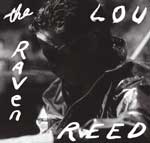
Words from the Past Enacted AnewA double-CD ode to Edgar Allan Poe by Lou Reed is indeed a curious thing, and I looked ahead at the chance to review it with a mixture of eagerness and dread. Would it be a flight of musical freedom, or would it be the worst sort of art-school project? The question remained open with the inclusion of guests such as Willem Dafoe, Steve Buscemi, Elizabeth Ashley, Amanda Plummer, as well as David Bowie, Ornette Coleman, and many more.
The opening piece, "The Conqueror Worm," seemed promising. Willem Dafoe's spoken words are affecting, and the roiling feedbacking guitar in the background inevitably invoked Metal Machine Music for those who remember its experiments fondly. The bombastic "Overture" was a nicely cacophonous introduction, followed by Steve Buscemi reading in "Old Poe", accompanied by gentle guitar and cello.
Thus far things were really going pretty well. Then I hit "Edgar Allan Poe." Its heavy rock abetted by a horn section was pedestrian but tolerable, but unfortunately the lyrics reduced it to banal. After I heard the sadly meaningless chorus a hundred times, I had had quite enough.
With "The Valley of Unrest" I was returned to a very nice combination of spoken words and ominous musical textures which worked well. This pattern continues throughout both CDs – the spoken words mix wonderfully with excellent musical arrangements, but the original songs primarily suffer in comparison. Reed's lyrics often get stuck on repeated phrases: "Call On Me" and "Change" are good examples, wherein the music itself is fine, but Reed's vocals are strangely rough and off-key, and the lyrical repetition stands poorly in contrast to Poe's words. Perhaps that's inevitable, but it points out the danger of this sort of project. It would have been safer, though perhaps less exciting, to stick with Poe's words and not embellish with other material.
There's no doubt, however, that musically this album reaches and pretty much scores throughout. There's the heavy rock and horn combo of "A Thousand Departed Friends" and the floating synth gloss of "Perfect Day," the latter a remake of an older Reed song that ends up sounding rather like a recent 4AD release. Then there's the self-descriptive "Broadway Song," with Buscemi on vocals doing a perfect Times Square delivery, and the pounding drums and layered guitars of "Burning Embers," for which Reed adopts a gravelly Tom Waits-like vocal delivery.
More often, though, I found myself admiring the textures, layers, and sound effects used to augment the spoken-word pieces. The dense, harrowing electronics that reach their peak at the end of "Imp of the Perverse," for example, or the looping feedback of "Guilty - spoken" and the eerie synth washes of "A Wild Being from Birth." Pretty much all of the major texts like "The Fall of the House of Usher," "The Cask," and the title piece are wonderfully done. Many of the best surprises, though, are the less-known works, which will hopefully open the eyes to many for whom "The Raven" solely defines Poe.
And then there's "Fire Music," which will shock the hell out of anyone who hasn't enjoyed Metal Machine Music. Massive walls of screaming electronic noise of which Merzbow would be proud, the song was recorded three days after September 11th, in Reed's NYC studio. While I'm not sure what, if anything, it has to do with Poe, as a return to MMM's avant-noise, the piece is terrific – though I doubt that all of Reed's fans will feel the same way I do!
So, then, is this experiment a success? I'd say it is, in general. Despite some rather glaring missteps, the words of Poe shine clearly through the excellent delivery given by the various guests here (to be honest, it would be hard to fuck up having Willem Dafoe speak Poe's texts). This is apparently being released in both single and double-CD configuration, so you can always go for the abbreviated version if you're unsure about it. But if you're curious, and certainly if you're a Poe fan, there's definite enjoyment to be had here. By Mason Jones
|
||||||||||||||||||||||||||||||||||||||||
|
||||||||||||||||||||||||||||||||||||||||||
| |||||


 View all articles by Mason Jones