



|
|
|
|
|
|
|
|
|
|
||||||
| |||||
|
|
||||||||||||||||||||||||||||||||||||||||||
|
|
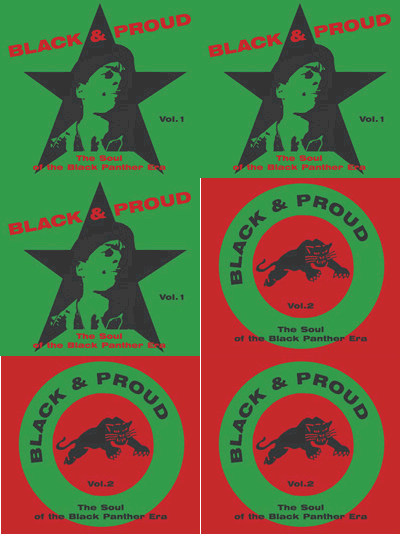
Turn the Daylight BlackBy and large, politics and music don’t mix. We pay musicians to play music, to do that little song and dance, collect their checks and go home. You wouldn’t pay to hear Lewis Lapham play C&W; don’t accept punditry from Steve Earle. Or, let’s face it, Ian MacKaye. No sociopolitical “movement” should revolve entirely around one minute-long Minor Threat tune. Keep your politics out of my music. Fully and completely? That doesn’t entirely wash. The constraints of pop lyrics certainly forbid any complex political thought, but simple protest is a different story. Pop music has – precious few times – effectively shouldered the simple politics of despair. Despair can’t change anything by its lonesome, but it can be a fine catalyst. Punk managed it more than once. And this two-volume comp unearths a goldmine of Marvin Gaye-style ‘60s soul and proto hip-hop that sets the basic tenants of the Black Panthers to song. Political music is worthwhile if it would sound good sans politics. All this music has merit outside ideology. It wouldn’t be worth hearing if, like a lot of well-intentioned punk and “folk” heartbleeds – and, to be fair, the robotic blathering of Aesop Rock - it didn’t. There’s simply no way to extract this music from its sociopolitical context, but, if there were, it would still be sizzling, infectious, righteous, heartfelt funk, on par with anything else of its kind. At its best, it’s better than “Inner City Blues.” It sure beats the shit out of the MC5. The music here shifts from sleek Bar-Kays sound-alikes to the embittered testimony of Gil Scott-Heron to the ominous bongo-fueled ranting of the Last Poets to a group of kids singing the praises of angel-dusted showstopper James Brown. It can’t be defined. But it maintains some consistency in its simple, powerful ideas. Plenty of it is pissed at whitey, but, on the whole, it’s more interested in self-reliance and self-discipline. If the Man fools you once, shame on him. If he fools you again and again, shame on you, again and again. It’s iconoclastic (George Soule goes so far as to sing “I’m so tired of those that keep on saying/We’re gonna overcome/H’s got the poor man’s money in his pocket/And his woman in his arms/Hypocrite, y’all”), but in search of solid heroes (it consistently supports Malcom X; these days, it’s hard to remember how brave a position that used to be, even for the brothers and the others). It tempers anger with optimism. At times, it can be decidedly esoteric: Hank Ballard’s “Blackenized” extols the virtues of a good haircut (you may remember Hank from his “Work With Me Annie” days as a witty smut-peddler), while the Staple Singers’ “Respect Yourself” warns against cussing in the presence of ladies. But it all fits, somehow. Like the garage rock of the same era, this soul thrives on technical limitations. Most of these performers lacked Gordy connections. There’s no wall of orchestration here, just raw, visceral, direct, treble-heavy crispness. ‘Smatterafact, these are analogous to the production values that propelled the Bomb Squad in the early ‘90s. Most of it is readily danceable (certainly more so than the Temptations, once their music devolved into psychedelic slop, or any of the P-Funk to come), but the lyrics rag down “those that just like to socialize.” They’ll never tell you to get down. It’s all about coming up. This attitude could well serve anyone, of any race, wallowing in the quicksand of whining victim culture. At the very least, it could give them the energy to kimble to the library and crack a book, which is the most one can expect of political music. And the price of admission gets you Melvin Van Peebles’ “Won’t Bleed Me,” from Sweet Sweetback’s Baadass Song. By Emerson Dameron
|
||||||||||||||||||||||||||||||||||||||||
|
||||||||||||||||||||||||||||||||||||||||||
| |||||


 View all articles by Emerson Dameron