|
|
 |
Dusted Reviews
Artist: Ryoji Ikeda Album: Op. Label: Touch Review date: Mar. 10, 2003 |
|
|
|
|
Ryoji Unplugged
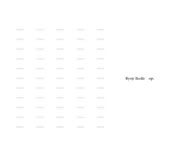
Like Ryoji Ikeda’s previous albums for Touch, the empty white space and subtle geometric pattern on the cover suggest precisely conceived electronic music – cleanly cut-up and perfectly pitched. On +/- and O°C, his pure sine-wave tones, sliced samples, and electronic pops mix with amplifier hums, pulsing bass, and even a human heartbeat to create gorgeous mixtures of cool and warm, digital and analog. Ikeda whittles each of these sources down and then lets the disparate elements run together, creating rhythms that resemble the operating room more than the dance floor.
Op., however, is similar in cover design alone. The inside sleeve reads, “No electronic sounds used.” Op. features four compositions for four groupings: nine strings, two quartets, and a trio – no sampling, clipping, or shaping allowed. In “Op.1”, Ikeda combines elongated dissonant notes that never resolve into comfortable harmony. Sometimes these groupings build a note at a time and then dissipate, other times the players begin at the same time and fall off individually. Frequently each combination is surrounded by silence, disconnected from the rest of the composition. The third part of “Op.1” (tracks three and nine) adds a rhythmic cello pluck that brings structure to the pitches that otherwise follow no specific speed.
“Op.1” offers dissonance at its most austere. “Op.2” and “Op.3” include parts that assume a more lyrical role than the opener. Instead of strictly playing the note combinations and then pausing, the strings play longer lines that underscore the resulting discord, even adding small doses of cello vibrato in “Op.3”. These pieces move more fluidly with fewer outright silences between note groupings.
These compositions recall Morton Feldman’s pieces in the 1950s, when he sought to detach sounds from rote pitch relationships that had existed for generations of classical composition. He and his New York contemporaries wanted to release notes from “meaning” and make each sound have its own weight. Toward this end, Feldman used graphical notation that simply prescribed pitch as High, Middle, and Low, and players decided where these ranges lay and what notes to choose. He also used silence to surround his notes so they existed unimpeded by one another.
Ikeda’s compositions have a similar effect. The note groupings range from extreme dissonance to the occasional combination that deceivingly resembles a conventional chord. Because these notes “don’t go together,” their combination calls attention to each note individually. They aren’t part of a whole in the conventional sense of a harmony, so they stick out even though played simultaneously. These sorts of spacious productions arise in the idiosyncratic rhythms and pure tones of Ikeda’s electronic records. His elements don’t surrender to the greater whole; they simply coexist. In this sense, while Ryoji’s unplugging produces a different collection of sounds, the detail and precision of his sonic world continues in these tensely elegant compositions.
By Jeff Seelbach
|




 Formula