



|
|
|
|
|
|
|
|
|
|
||||||
| |||||
|
|
||||||||||||||||||||||||||||||||||||||||||
|
|
Richard Skelton’s work as A Broken Consort is, ostensibly, consistently and easily contextualized within a broader composer-centric scene. Nick Cave and Warren Ellis, for example, deal in similar realms of psychogeographics with their soundtrack work on The Assassination of Jesse James by the Coward Robert Ford and the like. There, the compositions render emotions on the physical plane. Landscapes and troubled faces don’t just feel alienated or manic or soul-crushingly vast. They look it.
When listened to alone, separated from the diegesis, those soundtracks remain cinematic. Which is a problem: they become atmospheres unanchored to any terra firma. Something is lost without the context of either narrative or image. You can certainly still guess at what’s going on, how you should be feeling, but the why’s and what-for’s are never answered. The whole picture is never fully realized.
Which is where the innovation and singularity of A Broken Consort begins to become clear. Skelton doesn’t try to mimic, channel, or evoke his native town of Lancashire’s landscape. Instead, he distills it. What you hear isn’t an approximation of his home. It’s a self-contained construct with a reliance on its own internal rhythms and structures. So despite its proximity to Cave and Ellis’s brooding soundtracks or the music dubiously designated ambient, Crow Autumn is never an ethereal experience. There’s no dependency on some other narrative. In fact, listening elicits a visceral reaction.
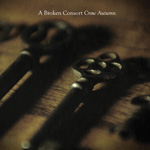
This permanence has always been present in Skelton’s work, particularly last year’s Box of Birch, an actual monument and memorial to his late wife. But this time around, more than description and construction are present. There’s a storyline with real movement through the cluttered sonic spaces he’s crafting. The usual cast of acoustics are present: guitar, mandolin, piano, violin, and accordion, as well as the vague metallic clangs that echo throughout. But this time they begin to take shape as actual characters.
Take the piano. It appears in the same fashion as before, incidental cameos that are evocative of the arpeggiated horror in “Tubular Bells.” The idea initially seems somewhat stale, a holdover from the previous record, where it still possessed an element of surprise. But by the halfway mark on “Mountains Ash,” this signature develops a personality. It reappears at unexpected times with a consistency and pattern that becomes discomforting. Like Poe’s raven, or the Cheshire Cat, it becomes something that is never fully elucidated, but an important figure that advances the story.
“Mountains Ash” is the lynchpin of the record because it’s where things truly congeal and sets up for the intensely climactic “The River.” It’s the point where Skelton establishes that this record isn’t a retread of Box of Birch, but a continuation of ideas, and a meditation within that space. I say within because so much popular music is seen as a “meditation on something.” Which means not so far below the surface, there’s some kind of exploratory mission for meaning. Or a lesson to be learned. Self-contained meditative practices are far more infrequent. We’re not comfortable with koans; there needs to be an answer and a destination. We have to get from one place to another, and the route has to be discernible.
Which can make this record frustrating at first. Despite the amount of activity present here, Skelton is often vague or opaque. There is a lot of narrative movement, but basically zero displacement. But by the time the record has almost imperceptibly slipped into "The River," the many details and digressions that Skelton has been illustrating begin to finally come together. It’s a lot like sitting for a portrait: at first the formlessness and the seemingly interminable sitting are borderline infuriating. But then the abstract and unfinished markings cohere, and an image takes shape. Skelton takes these non-linear means to a fully realized endpoint. You just have to be willing to get there. By Evan Hanlon
|
||||||||||||||||||||||||||||||||||||||||
|
||||||||||||||||||||||||||||||||||||||||||
| |||||


 Box of Birch