|
|
 |
Dusted Reviews
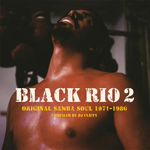
Artist: V/A Album: Black Rio 2: Original Samba Soul, 1970-1979 Label: Strut Review date: Jul. 6, 2009 |
|
|
|
|
The phenomenon of cultural exchange known as the Black Atlantic has been studied at least since anthropologists like Melville Herskovits noted Black African “retentions” in southern U.S. culture. We now have a more nuanced understanding of the circulation of peoples and cultures between Africa, Europe, and the Americas, no longer thinking in terms of “retention” (which ultimately implies decay) but in terms of “hybridity” (which suggests fertility).
In no small part, this sea change is the result of close observation and detailed history of the flow of popular music from country to country. We in the U.S. are accustomed to being consumers of other countries’ cultures, but just as often the flow goes the other way, or bypasses us entirely. In the case of the U.S. and Brazil, some listeners know about the spread of jazz, folk, heavy metal and jazz, but these are by no means the only examples. The new contribution by London-based producer DJ Cliffy, Black Rio 2, provides an excellent extension to these examples, showcasing music from 1970s Rio de Janeiro fertilized by U.S. soul and funk.
DJ Cliffy’s 18 selections range from straight imitation (a cover of Marva Whitney’s “It’s My Thing” by the Cry Babies) to pure bossa nova (“Ta tudo ai” by Rubinho and Mauro Assumpçao). The purer cuts (in terms of genre) are stellar examples, such as the samba tune “Novo dia” by Balança Povo.
But when the lines get fuzzy, things really get interesting. Emilio Santiago’s funk version of “Bananeira,” originally written by Gilberto Gil, reveals its bossa nova roots only in the bridge – the rest of the song is pure funk, with heavy bass, horns that pass the Juba lick (a.k.a. the Duckworth cadence) back and forth, and a versatile drummer who shades from funk into samba and back so smoothly, it seems impossible. A number of the songs feature the Brazilian style of shout vocals, echoed by unison chorus, that is rooted in Afro-Brazilian candomblé religion; one of these, (“Oi gere” by Watusi) blatantly calls upon the Orixa, and especially the god Xango, while “Ibere” (by Avan Samba) is a fast, funky samba with berimbau, cuica, and lyrics about capoeira.
Other songs combine the smoother singing style of bossa nova with jazz-rock fusion (“Salve, Rainha” by Claudia), funk (“Sinal vermelho” by Marlene), and soul (“Faz tanto tempo” by Renata Lu). The disc ends with Sonia Santos rapping “Poema ritmico de Malandre” over cavaquinho, cuica, bass, drums and horns, a poem celebrating Brazil’s musical contributions to the world. It’s a fitting close to an album that consistently pleases. Taken together, the cuts on Black Rio 2 demonstrate the vitality and creativity of the Black Atlantic.
By Richard Miller
|





 View all articles by Richard Miller