|
|
 |
Dusted Reviews
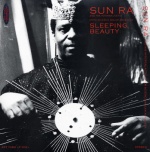
Artist: Sun Ra Album: Sleeping Beauty Label: Art Yard Review date: Oct. 15, 2008 |
|
|
|
|
By 1979, Sun Ra had become more than just a cult figure admired by the outer limits of free jazz fans. He appeared on the cover of Rolling Stone in 1969, taught his mythology for a semester at UC-Berkeley in 1971, further codified that mythology in the film Space is the Place in 1971, and appeared on SNL in 1978. He traveled the world giving performances with the full Arkestra and with small ensembles; and his sound gradually shifted away from the uber-free jazz of the late ’60s, beginning to incorporate both early big band swing (his love of Fletcher Henderson is well-documented) and contemporary popular music, including disco and funk. In the years that followed, he would give talks and performances at some of the top universities in the country, his sound would normalize even more, and his rate of recording would slow (relatively speaking). So, for whatever strange reason, the late ’70s mark the beginning of Sun Ra’s late period, one of normalization and, while I don’t want to say decline, there is a certain settled feeling to those recordings. This particular album is the third full-band, studio album from 1979 (Nov. 1, to be exact), recorded at the same sessions that would produce Strange Celestial Road, joining a handful of small-group sessions and live albums.
What is immediately striking about Sleeping Beauty is just how sedate and decidedly straight-forward it is. It marks a kind of half-way point between the preternaturally uneasy calm of Lanquidity and the full-on disco of On Jupiter (the former from mid-1978, the latter from October 1979). In a way, this was the perfect compliment for On Jupiter, a chill-out session to follow that album‘s driving, danceable cheerfulness. Even at its most agitated on the smooth disco of “Door of the Cosmos,” the energy level never even raises one’s pulse. On all three tunes here, the chord changes are fairly mundane: the Arkestra is playing fairly conventional big band charts (with the only harmonic craziness coming from Sun Ra’s keyboards); the band’s chants are more instructably oblique than ever; electric guitar and bass play a critical role in driving the music; and the solos are decidedly tonal. This kind of music would be entirely out of place in the late ’60s and early ’70s, ESP-disk Heliocentric World and Strange Strings incarnation of the Arkestra, but within the context of late-’70s Philadelphia, home of Philadelphia International and its related funk and disco scenes, it makes a bit of sense. And Sun Ra was strangely sympathetic to all of this, saying when questioned about the “hokeyness” of Ra’s musical influences during the On Jupiter sessions, “This hokey shit is someone’s hopes and dreams. . . Don’t be so hip!” (quoted by John Szwed in his fantastic bio of Sun Ra, Space is the Place.)
It’s hard to say whether this drive to be less hip has to do with age or a change in Sun Ra’s ever-restless muse, but what is clear is that he knew how to impose creative tensions on his band. In the title track, an 11-minute slow-burning groove around an unexceptional set of changes, you can hear various members of the Arkestra struggle to fit their soloing styles within normal chord changes, with results that strain the definition of both the chords and the flying, dissonant runs that folks like Marhsall Allen do so well. His solo about eight minutes in stands out, particularly for the strain it puts on the song’s form and mood. Little moments like that are what make this “normal” music so compelling.
By Dan Ruccia
|




 Spaceship Lullaby