|
|
 |
Dusted Reviews
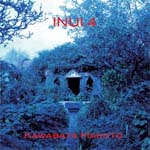
Artist: Kawabata Makoto Album: Inui.4 Label: VHF Review date: Jun. 30, 2008 |
|
|
|
|
Over his prolific career––both solo and at the helm of Acid Mother Temple’s various incarnations––Kawabata Makoto has championed process over product. The size of his discography is legendary, and it seems like hardly a week goes by without seeing his name connected to a new release. Unfortunately for listeners, it means we have to make choices that Kawabata, as the artist, should have made. We get to hear some interesting finished works, but we also end up with a lot of the scraps of wood left on the workshop floor, the painted-over canvases, the legal pads filled with plots, character sketches, titles. These can be interesting, but they are not something to build a career on.
At first, Inui.4 would seem to be something more polished and coherent. “Ryo” is a single 67-minute piece of acoustic and electric guitars, extended synth beds, gurgling tones and hurdy gurdy. There’s a strong Terry Riley feeling here, as the music flows effortlessly. However, without the underpinning of just intonation, it’s a continuous unfolding with no peaks, no beginning, no end, no middle, and no dynamics that separate one part from another.
The only major switch comes 46 minutes in, when the whirring field of sounds is abruptly switched off, and a weightless swath of bright, creamy tones begins while a gossamer wave from a hurdy-gurdy undulates in the foreground. There are two layers, but very little interaction. Why not make this section into a new piece, or build a more interesting transition? Such questions don’t seem to concern Kawabata, and thus he misses the point: Sure the journey is interesting, but even more interesting is the transformation that happens on that journey.
More than anything, a record like Inui.4 shows us that Kawabata is a virtuoso of prolixity, never asking himself why he does what he does. In the past, he has summed his musical philosophy with this description: "Music, for me, is neither something that I create, nor a form of self-expression. All kinds of sounds exist everywhere around us, and my performances solely consist of picking up these sounds, like a radio tuner, and playing them so that people can hear them." This sounds as if he doesn’t really question what comes through that radio, doesn’t put any responsibility on himself. If he doesn’t occasionally turn his radio off, then maybe we as listeners should.
By Matthew Wuethrich
|





 View all articles by Matthew Wuethrich