



|
|
|
|
|
|
|
|
|
|
||||||
| |||||
|
|
||||||||||||||||||||||||||||||||||||||||||
|
|
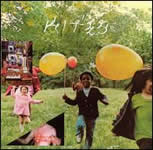
Load has never been a label to pull punches, but Kites (a guy allegedly named Christopher Forbes) kicks out the sonic collage assault far harsher than most of the semi-standard prog/skronk/thrash we’ve come to expect from Providence’s finest. And, as anyone even remotely familiar with the Brainbombs, Mindflayer, or Pink and Brown would readily agree, that’s saying something.
First off, a disclaimer: “noise” is perhaps the most insanely whored-out word in the daily lexicon of left-of-center music journalism. As an adjective, it’s been bandied about so wantonly – to describe everyone from My Bloody Valentine to Merzbow to Pink Floyd (!) – that it’s now a totally vague and meaningless adjective. Nevertheless, Royal Paint with the Metallic Gardener from the United States of America Helped into an Open Field by Women and Children is nothing if not non-stop noise.
Well, actually, there’s some stops, but only in a stuttered, channel-surfing sort of way, like cutting from a nine-minute, squealing, mechanized drill attack track to a simple, 60-second sing-song poem where the only instrumentation is handclaps and lap slaps. The juxtapositions are jarring and uncomfortable, rendering the record’s rare lulls in loudness – brief acoustic meanderings, or sporadic spells of silence – as just menacing calms before impending violent electrical storms. Musically speaking, Royal Paint is not kite-flying weather.
The opener, “Staring at the Sun,” sets the tone: caustic, spastic, and spontaneous. Forbes is most frequently identified as an “electrical system operator,” which is fitting because Kites’ sonic terrain is a wasteland of fried wires, crazy looping bleeps, and piercing oscillators. Occasionally, like on “Suppress Control Reduce Destroy,” the circuit-board-gone-haywire sound buzzes so brutally it borders on electro-industrial, with frantic, distorted screams writhing in the mayhem.
More often than not though, Royal Paint pursues the path of knob-twiddling ear-gougers like Masonna and early Hanatarash, modulating malfunctioning white noise processors into jittery squiggles of screeching chaos. Of course, it’s important to remember that this is American music, so naturally Kites is a lot more choppy and restless in his approach to textures and exploration than the focused, ritualistic intensity so distinct to most solitary Japanese noise gurus. It’s less Zen, more ADD (and land of the free).
Further, like a lot of extreme noise stuff, Royal Paint seems best suited for a live setting (preferably someplace crowded and dark), and side B’s wild medley of 2003 performances, “Call Out Your Real Name,” confirms this notion. The shrieking isn’t thrust so crisply into the foreground, and the lo-fi recording conditions mute the overall sprawl into something stranger, rawer, and almost musical, more in the vein of broken electronics bands like Hair Police and Universal Indians, who at least toy with rhythm and structure before destroying them. By Britt Brown
|
||||||||||||||||||||||||||||||||||||||||
|
||||||||||||||||||||||||||||||||||||||||||
| |||||


 Peace Trials