|
|
 |
Dusted Reviews
Artist: Silje Nes Album: Ames Room Label: FatCat Review date: Mar. 12, 2008 |
|
|
|
|
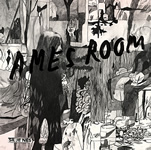
An Ames Room is a trapezoidal room constructed to create an optical illusion; when two people of about the same size are situated at opposite sides of the room, one appears to be a giant, and the other a dwarf. Silje Nes's aptly-titled debut creates a similar sense of disorientation: comprised of songs written and recorded over a three-year period (not sequenced chronologically) in a number of widely divergent styles and recording techniques, the album defies the listener to make sense of the whole, or at least to uncover what logic (if any) holds it all together. This might be merely exhausting or frustrating if it were not so integral to the experience of the music itself: Ames Room, both as a whole and in its individual parts, plays upon unexpected juxtapositions and approaches the familiar at a slightly skewed angle.
Much of the meeting of the familiar and the strange that pervades the album can likely be attributed to Nes's rather willful (but not necessarily contrived) naiveté. She avoids the piano, the only instrument on which she is classically trained, and gravitates towards guitar, drums, and all manner of found objects used for percussion. Her recording technique is similarly uninformed, as the tracks gathered here, all home recordings, often seem to be as much about experimenting with the technology (whether it be laptop or 4-track) as they are about songwriting in a more conventional sense.
This naiveté and refusal to master her material (songs, instruments, technology) is a bit less apparent on the electronically-based and instrumental compositions, perhaps because they come with the DIY territory. These range from lo-fi laptop sound manipulations accompanied by acoustic guitar ("Shapes, Electric") to a typewriter-based soundscape punctuated by bursts of flute ("No Bird Can"). While admittedly lovely, these tracks feel a bit predictable, as though ready-made for critical adjectives like "whimsical" or "homespun." The genuine innocence and apparent ignorance of convention becomes much more apparent on the more rock-oriented, guitar-based tracks ("Giant Disguise," Recurring Dream," "Searching, White"). While these hardly sound unfamiliar, they bear the marks of someone trying to recreate something they have heard but failed to completely comprehend – only about half of the pieces feel like they are in the right place. "Recurring Dream," the strongest of these tracks thus sounds at one brief moment like a typical indie rock tune, but then falls into unexpected dissonances and instrumental passages. Other times, the skewing is only slight; "Bright Night Morning" is perfectly passable folk-pop, the only odd element being Nes's unschooled drumming.
Paradoxically enough, Ames Room seems most original when it moves towards the conventional, if only because the idiosyncratic way Nes approaches familiar structures serves to better highlight the very real innocence and spontaneity of the album as a whole. While Nes makes no attempt to pass herself off as a complete music naïf (she can clearly play quite a few instruments, and has listened to quite a bit of music), she manages to keep her creations relatively free of contaminating influences. She has no qualms about being too derivative, and hence doesn't try and make her music too militantly original, instead remaining somewhere in the comfortable realm where things are at once familiar and ever so slightly strange.
By Michael Cramer
|




 Opticks