|
|
 |
Dusted Reviews
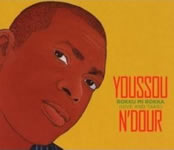
Artist: Youssou N'Dour Album: Rokku Mi Rokka Label: Nonesuch Review date: Jan. 25, 2008 |
|
|
|
|
As a young innovator in the 1980s, placing his soaring vocals over a thrilling big band amalgam of Wolof tradition and Afro-Cuban style with Etoile de Dakar, Youssou N‘ Dour set himself up early for a brilliant and varied career. In the years since, he’s been a restless and passionate explorer, traveling widely and blending sounds and styles in endless ways, always coming back to the nourishing traditions of his cultural and spiritual roots in Senegal.
At first approach, Rokku Mi Rokka seems shockingly poppy. The bouncy, burbling, and fizzing synth lines of the opening track “4-4-44” stick like afro-pop bubblegum. It’s only after a couple of listens that the radical simplicity and elegantly sculpted density of this tight little album is revealed. Indeed, each track offers a unique and brilliant sonic hook – the rattling and insistent cross rhythms of guitars and keyboards on “Bàjjan,” the majestic down-shifting Arabic-tinged chord progression on “Bay Faal,” to give just two examples. Expressive tama (talking drum) work from Youssou’s longtime collaborator Assane Thiam is a crucial part of the overall architecture, and the conversational sound of the traditional, stringed xalam is a vital presence. (N’Dour has said in recent interviews that the making of Rokku Mi Rokka took some inspiration from the direct and hard-hitting ethos of music from the desert northern region of Senegal, and that blueprint works to good effect here.)
As in most of the best African pop records, the mix puts the singing way up front, where every nuance of vocal character and the narrative it carries is absolutely clear. Youssou N’Dour has one of the great voices on the planet, and he uses it mostly to uplift and illuminate, offering storytelling, history lessons, and poetic visions of pride in Muslim society and descriptions of modern Senegalese life.
And beneath the vocals on Rokku Mi Rokka, what seems at first to be a sleek and modern flat-surfaced blend reveals a multi-textured assemblage of auditory detail: guitars, bass, keyboards, West African strings and percussion all find room for themselves in a conversation with a definite unity of purpose. It is simply a stunning achievement in mixing. I would love to have been in the studio when it went down.
The last two cuts on the disc take an odd little retro detour. Neneh Cherry’s rap on the hip hop-tinged “Wake Up (It’s Africa Calling)” is supple and smart, but it doesn’t quite lift the song out of what has become a clichéd genre. “Xel” might be even more retro, with its Afro-Parisian zouk-ified horns and a vocal chorus reminiscent of vintage 1980s Johnny Clegg and Savuka. I’ll admit that I actually found these two cuts sweetly nostalgic. But going back and listening again to Rokku Mi Rokka from the beginning reveals that the real strength of the record is to be found in the focused passion and integrity of expression that rises from its sleek and carefully-wrought surface.
By Kevin Macneil Brown
|





 View all articles by Kevin Macneil Brown