|
|
 |
Dusted Reviews
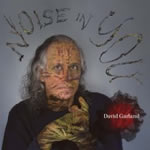
Artist: David Garland Album: Noise In You Label: Family Vineyard Review date: Dec. 5, 2007 |
|
|
|
|
“I’ve been associated with New York’s ‘Downtown’ scene, but I’ve never been out of love with the possibilities of harmony and melody. I want to be free of stylistic assumptions, so that as I create music I’m not thinking about traditions, but instead I’m working with the elements of melody, harmony, rhythm, words, and sonic color to build a new and true experience,” writes David Garland on his webpage. Noise in You shows that this is completely true, in kind of a strange way.
The ninth album of the long-time radio DJ, outsider aficionado, and all around Renaissance Man of audio-obscurism, really does bring to mind a slew of various musical traditions from the very first second of listening. It does so, however, in a way that reveals Garland as the consummate music fan, copying no one but channeling decades of culture he’s absorbed. There’s that tired old cliché about first learning the rules and then breaking them; Noise in You breathes new life into that old adage. The 16 tracks on Noise in You are written as though myriad influences are unconsciously finding expression through Garland. He sets out to make something personally expressive, built around a characteristically folksy core, and the traditions he draws on bond together seamlessly in a wash of quirky idiosyncrasy.
Following an introductory prelude, “Diorama” displays Garland’s effortless baritone, one that sort of pre-figures Stephin Merritt with less overt melancholy. The song that Garland’s voice accompanies is twinkling with cinematic innocence, like something out of a children’s movie, but the female harmonies that surge throughout it are undeniably reminiscent of those found in songs by The Mamas and the Papas, or any number of L.A. psych acts. “Every Bird,” which features guest vocalists competing to match Garland’s vocal bombast, explodes as if it were scored for stage. In “Damn Dreams,” Garland manages to create an equally theatrical atmosphere with only an acoustic guitar and an ear for melody.
At the same time, Noise ripples with waves of subtle experimentation. The use of looping sound to create the beat behind the introduction of “My Contraption” further exemplifies that Garland is unbound by a desire to sound like anything in particular. His lyrical style, though, seems even less fettered. Garland sings songs in a conversational storytelling style that privileges meaning over rhyming, giving the vocal a distinct cadence. Garland sings about his dreamlike take on life with the matter-of-factness that David Gedge sings about relationships, with a penchant for phonemes reminiscent of Syd Barrett’s madcap meter.
In Noise in You’s eponymous track, Garland elevates a story about John Cage to the level of a folk tale. It’s that tendency to approach everyday reality with dreamlike wonder that’s most important to the disc, that makes it feel like some combination of Prokofiev’s “Peter and the Wolf” and an outsider folk outing.
By Matthew A. Stern
|





 View all articles by Matthew A. Stern