




|
|
|
|
|
|
|
|
|
|
||||||
| |||||
|
|
||||||||||||||||||||||||||||||||||||||||||
|
|
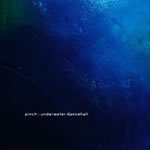
Pinch is a Bristol-based dubstep producer, which makes him a bit of an anomaly in the heavily South London-centric genre. The fact that Underwater Dancehall is a standalone album (released as a 2-disc/LP set, one for vocals and one for instrumentals) is also something of an oddity. Instinctually, one might say that the genre moves too fast to be effectively captured on an album, that the critical success of Burial’s ectoplasmic transmissions among scene outsiders only reinforces this fact.
Underwater Dancehall, however, is a brilliant and fully realized debut even if we take for granted that, by presenting his work in album format, Pinch (né Rob Ellis) seems to sunder it from its indigenous context. Upon listening to these 10 tracks, one quickly realizes that the real error here would be to attempt to surgically re-attach it: Pitted against his contemporaries, Pinch’s productions come off as generously spacious, hard and lithe. In other words, they’re perfectly accommodating for collaborations more familiar to R&B or grime than to dubstep proper. They remind the listener that dubstep is not the exhaustively overdetermined offspring of historical moments (jungle, garage, 2-step, dub, etc.), but a dynamic process.
An “indigenous context” is then, by the genre’s own logic, a sterile construct at best. “Brighter Day” opens both discs, and gives the listener an idea of how much space Pinch gives his collaborators to re-deploy or modify his production ideas. First released as an instrumental 12” under the title “Qawwali,” “Brighter Day” features vocals from MC Juakali of New York’s Dub War, who also collaborates, with less success, on “Gangstaz” and “Trauma.” “Brighter Day,” to be fair, sets a high standard; the rhythm here is carried on a languid, irregular sub-bass pattern, accented by a brief accordion riff that sounds severed from something bigger and eviler. Juakali goes between overexerting himself to counter the track’s creeping unease and simply riding the gaping spaces carved out by the song’s burping lower frequencies. His voice and phrasing so powerfully resonate within the track that finding our own way around the instrumental track takes repeated listens.
Even among those of us outside of the UK subgenre’s sphere of influence, it’s well understood that dubstep moves along at the median speed of several modes of distribution, most importantly 12”s, pirate radio, club nights and blogs. So even as distribution and production become increasingly disembodied and mediated by the internet, the social remains an integral part of dubstep’s pleasure. The slogan “if ur chest aint rattlin, it aint happenin!” appears on Pinch’s MySpace profile, and it measures exactly what’s lost in translation. Earbuds or computer speakers can’t convey the particularity of Pinch’s sub-bass frequencies. While not as punishing or prophetic as contemporaries like Digital Mystikz, a track like “Battered” (featuring Yolanda), when played on speakers with decent dynamic range, seemingly makes the air thick. Much of this song’s effect relies on the dynamic interplay between Yolanda’s vocals, which ramp up from a whisper to frayed belting in the space of three minutes, the blockiness of the sub-bass and the stuttering drums.
The foregrounding of guest vocalists throughout the album (in addition to those listed above, Indi Khur and Rudey Lee also contribute) is certainly the album’s salient feature, largely because Pinch and his collaborators cover so much ground and the results stray from dubstep territory pretty uniformly. These approaches tend to be hybrid, with Juakali marrying toasting and multi-tracked self-harmonizing, Rudey Lee doing a modified roots reggae crooner thing, Indi Khur doing Elizabeth Frazer-ish non-specific ethereal ethnic chanting, and Yolanda turning out some epic performances in a synthetic “survivor” mode on the R&B/house axis. The instrumental disc has its own merits, but requires a little more volume to appreciate fully.
Underwater Dancehall, true to its name and the stakes it sets out, reaches backward and forward in time in one motion. Like the best dubstep, this album effects a kind of cognitive delay by providing the listener with a kind of density that makes sense affectively before it makes sense on a musical level. It’s these moments of temporary vertigo, as much as the dubby sense of space and motion found throughout the album, that make the title particularly apt. Despite the grimness and griminess associated with the genre (which is certainly in full effect here), there’s an excessive, affirmative energy, one that’s both deeply pleasurable and deeply demanding. Pinch won’t be able to escape Burial comparisons for certain purposes, but the difference that makes a difference here is just this sense of space and disorientation. While Burial’s music is rooted in a deeply uncanny, ghostly sense of place, Pinch’s production style both requires and creates a particularly immanent kind of space. By Brandon Bussolini
|
||||||||||||||||||||||||||||||||||||||||
|
||||||||||||||||||||||||||||||||||||||||||
| |||||


 View all articles by Brandon Bussolini