




|
|
|
|
|
|
|
|
|
|
||||||
| |||||
|
|
||||||||||||||||||||||||||||||||||||||||||
|
|
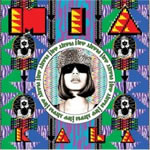
On the heels (or the crest?) of a hype honeymoon, expectations for M.I.A.'s Kala understandably center on how or whether she can settle into the grind of a career. Many corpses belabor the point: making a good second record is tough.
Inconclusive. Kala plays as mixed media pastiche, a barely restrained amalgam of ideas that are hardly exhausted by beats or flow and double and triple as political references. This album could have been a painting or a book. "Bamboo Banga" evokes, and is, a four-on-the-floor techno cut – a banger from a place where bamboo grows. M.I.A. is also a "bamboo banga," a kid running alongside a tourist's Hummer, selling trinkets – an image that veteran First World travelers might wince thinking about. But is she "banging on the door of your Hummer" from the outside or the inside, with a fist or a kick?
And so on. But maybe we've been asking silly questions. Here are some of the brands and products she drops:
…all of which might seem like a matter of course, on account of the musical debts to hip hop and single-based dance music, where the relationship to stuff is usually about unsubtle desire, or unsubtle repulsion sometimes.
But M.I.A.'s stuff is something else entirely, objects of an existentially discomforting desire that's shamelessly imposed and yet inescapable even for the cognizant. A complication of Thomas Friedman's "McDonald's Theory," in which two countries that have branches of that restaurant are said never to have gone to war with one another. Economic integration, to be sure, is not without its equally tragic symbolic violences, a point made by M.I.A.'s stuff, which is a misogynist warlord under a neon sign. "[Selfish men] make us meat like burgers / when I get fat / I'll pop out some leaders / A protocol to be a Rocawear model? / It didn't really drop that way."
The unshakeable desire for stuff can't be reconciled with its critical antithesis, however powerfully and smartly stated, and the record sits in the awkward place in between. To be clear, the place is awkward but the album is not. The music is catchy and fun, if overextended in places: Among the best successes is "Jimmy Aaja," an interpolation of an antique Bollywood cut with a sweet arpeggiated synth melody totally worthy of Moroder but with lyrics about Darfur and genocide tourism; "Paper Planes," a smooth, boastful number with gunshots in the chorus; and "Mango Pickle Down River," a song borrowed almost wholly from the adolescent aborigine hip-hop troupe Wilcannia Mob.
M.I.A.'s appeal, ironically, is not only her style, her beats, her evidently deep reservoir of ideas for mold-breaking dance singles, or even the content of her perspective on geopolitics. The thing that fuels the hype machine is her status as an emblem of globality, after a violent and contested journey from Sri Lanka to London to New York, and her willingness to curate the music and the voices of the Third World. She is no Paul Simon, and yet she absolutely is. By Ben Tausig
|
||||||||||||||||||||||||||||||||||||||||
|
||||||||||||||||||||||||||||||||||||||||||
| |||||


 Arular