




|
|
|
|
|
|
|
|
|
|
||||||
| |||||
|
|
||||||||||||||||||||||||||||||||||||||||||
|
|
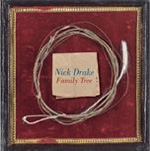
Though it certainly wasn’t the case during his lifetime, the popular and critical response that’s greeted Nicholas Rodney Drake’s life and music over the past two decades has been exhaustive. From record label retrospectives to BBC documentaries, attention has focused on a discography both brilliant and brief, and on a biography that – rather unfortunately – buoys romantic notions about art, addiction and illness. In cases like Drake’s, the collective always manages to plunge the dipper even deeper into a well that, one would think, had long gone dry. Hence the arrival of Family Tree, a 28-song collection that Drake recorded on a reel-to-reel prior to the release of his landmark debut, Five Leaves Left.
Family Tree is not substantially more or less than what it looks like – namely, an hour of previously unreleased demos by a musician whose most significant contributions were still ahead of him. Given the arc of Drake’s tragically abbreviated career, however, there are ways in which these recordings prove more intriguing than, say, a Hibbing, Minnesota high school student’s first documented fumbling with the blues. One reason is that, throughout Drake’s life, the artist and his collaborators wrestled with how his songs should be arranged and presented. During the recording of Five Leaves Left and Bryter Later, tensions emerged between producer Joe Boyd, engineer John Wood and Drake himself over the manner in which the singer’s skeletal songs should be adorned. While few would argue with the subdued string section on classics like “River Man” or the haunting counterpoints on “Cello Song,” the reaction to Bryter Later has been somewhat more mixed. Drake himself called the flickering, candlelight jazz and cooing backing vocals on tracks like “Poor Boy” “too full, too elaborate.” In many critics’ estimations, it’s the final record – the 28-minute Pink Moon – that marks the apotheosis of “authentic” Drake.
If Pink Moon is the artist’s most essential and personal statement, though, it’s important to recognize just why that’s so. Songs like “Place to Be” and “From the Morning” are fine examples of the singer’s warm and wizened voice, his strong yet brittle acoustic guitar playing, yet they succeed at least in part because of their aura of intimacy and isolation. The fact that Drake’s final studio album captures such an ephemeral burst of introspective beauty – acoustic guitar, vocals, and a lone piano overdub – fits with the notion of Drake as an artist ill-suited for this world; a withdrawn, tortured figure whose genius left him ravaged.
In many respects, Family Tree is Pink Moon’s obverse – a skeletal offering from the opposite end of Drake’s career, a collection that reveals the troubled loner as a preternaturally talented figure as steeped in the music of his immediate forebears as the 19th century Romantic poets he channels in his mature work. Through the faint hiss of tape, listeners will immediately detect the unique tunings and placid vocals that distinguish Drake’s best-loved songs. It’s easy to see how “Winter is Gone,” “Blossom,” “Come Into the Garden,” “Rain” and other fruits from Family Tree could have been dusted up for inclusion on any of Drake’s three releases. All are infused with the melancholy of seasonal changes in the Arden countryside – a hallmark of so much of his music.
Naturally, Drake sounds less comfortable in the skin of singers like Rev. Gary Davis (“Cocaine Blues”) and Blind Boy Fuller (“My Baby’s So Sweet”). Streetwalking blues – particularly the flattened twang of the Fuller track – aren’t Drake’s bag, although the way he gently softens the guitar line of Dylan’s “Tomorrow Is A Long Time” is a way of subtly bridging a similar distance. And, his cover of Jackson C. Frank’s “Blues Run The Game” – reminiscent, somehow, of Alex Chilton’s take on “Hotel Blues” – is sublime.
What’s most fascinating about the contents of Family Tree, however, is that they belie so many of the myths surrounding the creator of Pink Moon. Here, too, is a naked document of artist and guitar, yet the dynamics are profoundly altered. Drake goofily serves up a Bela Lugosi impression in his introduction to “Milk and Honey,” toots clarinet with aunt and uncle on Mozart’s “Kegelstatt Trio,” plays Richard Thompson to his sister’s Linda on “All My Trials,” and sounds generally loose and excited trying out new idioms. Far from the tortured, introverted soul many listeners have imagined, the Drake of Family Tree is in tune with family and history, using his prodigious gifts in a manner that’s atypically collaborative and outwardly engaged. No one could ever mistake this for Drake’s best work, but as a blueprint for what a healthier career might have looked like, it holds a bittersweet fascination. By Nathan Hogan
|
||||||||||||||||||||||||||||||||||||||||
|
||||||||||||||||||||||||||||||||||||||||||
| |||||


 View all articles by Nathan Hogan