




|
|
|
|
|
|
|
|
|
|
||||||
| |||||
|
|
||||||||||||||||||||||||||||||||||||||||||
|
|
Reviewing a single disc from a musician as prolific as R. Stevie Moore is like dropping hermeneutics on an issue of Mad Magazine. Since early tape experiments in the late ’60s, and beginning officially with the release of his first album proper in 1976, the popular WFMU DJ has offered a steady stream of his unique psychedelia-country-noodling-twisted pop grab bag. A recent release count, which includes the hordes of cassettes and CD-Rs he spews on practically a monthly basis, surpasses 400. In that sense, a review for Moore and similar artists – Jandek, the Frogs – serves more as a moment for reflection on the icebergs below the tips than on the album itself.
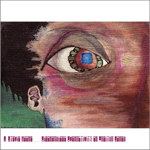
Here we honor the release of Overactivity or Tabitha Soren on New Jersey’s Forty-Seven Records, a label distinguished for its Internet-only free release policy. Really, there’s not much to be said in the way of criticism of the album itself, which exemplifies both the diversity typical of Moore’s output and its surprising depth. There’s no recommendation needed to hear it, either, since those curious can download the full album and cover art at www.fortysevenrecords.com.
Taking advantage of Internet technology is a natural advance for an artist as adaptable as Moore. Last August, video clips for songs both new and old began appearing on YouTube, another step in a progression that started with cassette and has extended to various video mediums. Through the success of these experiments, many place Moore at the center of the DIY ethos as a pioneer in self-production.
Yet, the result of the YouTube platform has been typical of this career outsider. Most of the several dozen uploaded videos boast views in the low hundreds, a number that barely registers on a site that attracts more viewers now than the entire Internet 12 years ago. No matter the medium, the sheer bizarreness of his tunes always seems to establish him on the margins of any structured musical community.
For the audience that appreciates the subtle drama in individual songs and/or the epic ambition in the career scope, Moore remains a kind of high prophet of creativity. But for a general public or a casually-interested crowd, it may be simply the principle of trees falling in forests and the non-listeners thereof. Since it’s apparent Moore will forever be pressing the key in his home studio to trap new legions of quirky demons, there’s no urgency to hear any one of his records. Further, it’s all so predictably weird, often remarkably so.
Or, perhaps the burden of public apathy is not incidental to so much production, but intrinsic. After all these years, can we really be expected to respond at all? Take writer Bill Millard’s scrambled-metaphor reformulation of the famous chaos theory example: “If a butterfly flaps its wings incessantly, yet a few continents away no storm follows, the question is not so much ‘Does anyone hear?’ as ‘Must everyone keep listening?’” By Joel Calahan
|
||||||||||||||||||||||||||||||||||||||||
|
||||||||||||||||||||||||||||||||||||||||||
| |||||


 View all articles by Joel Calahan