|
|
 |
Dusted Reviews
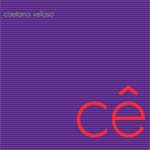
Artist: Caetano Veloso Album: Cê Label: Nonesuch Review date: Mar. 2, 2007 |
|
|
|
|
Throughout his multi-decade trajectory, Caetano Veloso has largely excelled while paring down. The perfumed pungency of his early Tropicalia milestones aside (though it should at least be noted that 1969's self-titled album is sheathed in the blankness of an empty page with only Veloso's signature and a Phillips logo providing any graphic landmarks), its the solemn nudity of 1975's Jóia, the poured concrète heat of 1973's Araçá Azul and the spectral desolation of his English-language efforts (1972's Transa and 1971's "London" album) that stand out from a teeming discography. These works find him experimenting with unconventional instrumentation and amorphous song-forms that continuously afford him more space to unspool lingering melodies in his inimitable voice: soft yet precise, a gentle timbre that is never as diffuse as it is sharply lathed.
Its rockist inclinations aside, Cê is in part a surfacing of these deeply-buried roots. "Outro" sets the disc reeling with an unsteady, three-legged skulk. A snare rolls as a nervy guitar and squid-ink bass trace a jagged triangle while Veloso rightly notes that "você nem vai me reconhecer." In English: "you won't even recognize me." In fact, for much of Cê i, Veloso is not quite like himself at all. He's almost having a Tin Machine moment minus the self-erasure that entailed for Bowie but certainly sharing a similar sense of scrubbing away the gloss, the sheen and the blubber. Also, Veloso has a better batch of tunes at hand.
Backed by a young trio and recording with little overdubs - how else to explain that exhilaration inherent to a live three-piece when the guitar veers off to scrawl furiously while in its absence the chatter of rumbling bass and shuffling drums is boldly revealed - Veloso toys with anthemics. "Rocks" finds palm-muted chunks of distortion, pulsing bass and crackling drums pushing the singer not only to lob slangy insults but even uncork a bellow worthy of the Thin White Duke himself that eventually morphs into a vibrato-warped rebel yelp. Later, "Odeio" laps up taut guitar lines that burst into flickering ectoplasm as Veloso intones, unruffled and urbane, "I hate you."
But for all the flashes of lighting-bolted voltage, there are lapses into thrumming solitude. A dusty snare shimmers softly as an electric guitars rattles like a polygraph's arm on "Minha Lagrimas" and both "Waly Salomão" and "Um Sonho" even recall early PJ Harvey with its light dollops of dry guitars, bass that slithers and blots and drums that crack like cartilage (all thwacked edges and lisping hi-hats). Cognizant that he's at work on something less than commercial, Veloso plays with little remorse. How else to explain closer "Heroi," a spoken-word diatribe that finds Veloso in-character as a specifically Brazilian malfeasance, part of the "Olympian and lonesome rich" blustering on about "racial democracy" while a cesspool of groaning bodies and sparks of errant electricity speak of the violent entropic forces underneath the rhetoric.
As signaled by its diminutive title (Cê stands not just for the letter C but its also a trimmed version of "you" in Portuguese), Caetano Veloso's album is couched in abbreviation and shorthand. Reduced to a few words, limited textures and tightly-wound rhythms, it is quite elegant in its clarity and cleanliness.
By Bernardo Rondeau
|





 Omaggio a Federico e Giulietta