|
|
 |
Dusted Reviews
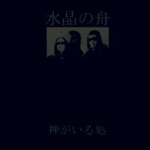
Artist: Suishou no Fune Album: Where the Spirits Are Label: Holy Mountain Review date: Jun. 3, 2006 |
|
|
|
|
Suishou no Fune are a Japanese three-piece whose approach to rock is slowly to divest it of recognisable structure, peeling away at the formal qualities of rock and leaving its bloodied innards exposed. The live recordings on Where the Spirits Are offer snapshots of this process, opening with a blur of free rock movement on “Vale of Spirits”, which navigates its way into a rock song of sorts, over which Pirako Kurenai’s voice bobs and slides, her soprano wail cleaving through the calamitous scaffold constructed by Kageo on guitar and Tail on drums.
When Suishou no Fune lose the drums, their songs slowly slip free of any moorings, with Kageo and Kurenai’s guitars blurring into a reverb-drenched, delay-soaked abstract machine. These more abstruse songs are indefinite, their internal workings shrouded and ghostly. Unsurprisingly, the group deal with supernatural and transitional states: check titles like “Apparition on a moonless night” and “Black phantom”. Kurenai’s voice thus simultaneously becomes a manifestation of this encroaching dread/unease and torchlight in the distance. By the final track, “A rose bloomed”, the trio are reduced to a wilting, expired duo, the gorgeous, coal-black threnody slowly compelling itself to close.
By Jon Dale
|





 Suishou no Fune