




|
|
|
|
|
|
|
|
|
|
||||||
| |||||
|
|
||||||||||||||||||||||||||||||||||||||||||
|
|
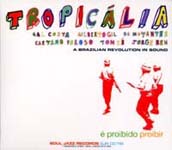
In 1968, as the decade’s youth movements began to succumb to paranoia and dread all over the world, young Brazilian pop musicians created a movement – Tropicalia – that, although it flowered only briefly, was a miracle of creative energy and artistic expression. With Brazil in the shadow of what would be two decades under military dictatorship, Caetano Veloso, Gilberto Gil, Tom Ze, Gal Costa, Jorge Ben, and the ground-breaking band Os Mutantes created a stunning body of work that drew from a fresh re-imagining of Brazilian tradition within the contexts and currents of western high art and low-brow consumer culture.
The main reference points of Tropicalia were the Brazilian music of the past – the urbane and artistic sighs of Bossa Nova and the raw, rough dance music of the Brazilian northeast were both crucial building blocks – and the psychedelic, consciousness-expanding experiments of the Beatles, Rolling Stones, and Jimi Hendrix. Contemporary art and film influenced the movement as well; indeed, it was an installation by artist Helio Oiticica that inspired Veloso to borrow the name Tropicalia. The installation featured the recreated interior of a rough favela ghetto shack, bathed from within by the light of a flickering television. That image remains a perfect reference point for understanding the music. (Another reference point might be Veloso’s repeated chant on the nearly contemporaneous “Ambiente De Festival” – not included in this collection: “E proibido priobir; “We prohibit prohibitions.”)
With this collection, compiled and annotated by S. Baker, Soul Jazz has released one of the most important anthologies to come along in quite a while. The profusely illustrated booklet and liner notes do a fine job of detailing the dizzying cultural, historical and political underpinnings of Tropicalia. And the selection of music is stellar, focusing, for a welcome change, more on the artistic expression of the Tropicalia artists and less on the (undeniably present) ironic, kitschy aspects of the style.
There’s plenty of pleasure here. For example, the rockabilly-style tape echo laid upon the nylon-stringed guitar for the northeastern Forro-influenced rhythm workout on Os Mutante’s “A Minha Menina”; the Gal Costa tunes that start with her supple Bossa Nova phrasing and might build into middle eastern glossalia (“Tuareg”) or an orgasmic voice and percussion jam (“Sebastiana”). The key artists of Tropicalia collaborated frequently, yet each kept their own character: Costa’s dynamism; Gil’s soulful, rootsy integrity; Caetano’s alluring and odd blend of sincere Donovan-esque balladry delivered with a hint of Mick Jagger sneer; Tom Ze’s trickster wordplay and stripped-down hermetic quirkiness.
Then there were Os Mutantes, who within the space of a single track might borrow tape processing moves from Stockhausen’s “Gesang der Junglinge” or Vareses’s “Poeme Electronique,” slip into a Motown groove overlaid with Mamas and Papas’ California sunshine vocals, then morph into a drum-led Candomble circle with fuzz guitar and electric organ freak-outs riding over the trance-inducing polyrhythms.
By 1970, Tropicalia had faded, as the military dictatorship clamped down hard, and Veloso and Gil suffered both prison and exile. But the radical and joyful impetus of the music to imbibe and celebrate Brazil while eating the fruits of other cultures remained a crucial tenet of Brazilian pop, helping to nourish the long and varying musical careers of many of the feast’s original founders. By Kevin Macneil Brown
|
||||||||||||||||||||||||||||||||||||||||
|
||||||||||||||||||||||||||||||||||||||||||
| |||||


 View all articles by Kevin Macneil Brown