|
|
 |
Dusted Reviews
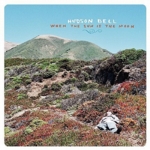
Artist: Hudson Bell Album: When the Sun is the Moon Label: Monitor Review date: Jan. 21, 2006 |
|
|
|
|
I’ve thought about it, and I cannot come up with a better description of Hudson Bell’s When the Sun is the Moon than the description that one of my editors offered: very good Pavement-meets-Dead Meadow indie rock. I really couldn’t say whether either band was a primary influence on Hudson Bell. He sings a bit like Stephen Malkmus, but since Bell was born in Baton Rouge that may simply be a lingering effect of his southern drawl. Production wise, Bell buries his melodies beneath layers of guitar fuzz, and while he has a more obvious pop sensibility than Dead Meadow, he’s equally fond of heavy riffs. Consciously developed or not, Pavement-meets-Dead Meadow makes for a winning formula. ’90s indie rock was at its best when it at least sounded apathetic; and feedback and distortion are to rock music what a villain with a gun is to the detective novel – an infallible way to fire up the proceedings if the audience is in danger of getting bored.
When the Sun is the Moon is Bell’s first album for Monitor Records, and was recorded after he relocated from the south to the Bay Area. The style is consistent, with all of the songs featuring Bell’s meandering lead guitar, which usually starts with a simple power-chord opening before meandering off into a furious, multi-tracked solo. The album’s seven songs break cleanly between two types, however. There are three songs that are relatively straightforward pop songs: “Seven Cities,” “Strange Lands,” and “Atlantis Nights,” the latter an outstanding three-minute song that revives a decade’s worth of slacker philosophizing in a few lines (e.g., “ ’cause down here, the bottom gets further each day”). Lyrically, Bell has a gift for writing succinct couplets free of any trace of songwriter angst. Consider this line from “Strange Lands:” “I’m standing on the roof, thinking about getting high, and maybe I don’t know what love is, but at least I gave it a try.” Just about sums up the dilemma of many modern romantics, I suspect.
The other four songs –“Slow Burn,” “The Falls,” “The Midnight Year” and “Sea Horse” – are more drawn-out, each running well past five minutes. “The Midnight Year” starts out as a straightforward pop song before sampled carillon bells drown out the band and the song heads off in an entirely different direction. “Slow Burn,” meanwhile, opens the album with squealing guitar feedback before finding its momentum about halfway through.
It would be misleading to suggest that there’s any tension between Bell’s songwriting and his musicianship, however. There’s not; he has managed to find a style that’s equally suited to the short, Pavement-style pop numbers and the epic, Dead Meadow-style psych numbers. That’s enough to make When the Sun is the Moon one of last year’s best, and sadly most overlooked, albums.
By Tom Zimpleman
|




 View all articles by Tom Zimpleman