



|
|
|
|
|
|
|
|
|
|
||||||
| |||||
|
|
|||||||||||||||||||||||||||||||||||||||
|
|
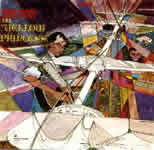
Originally released in either 1968 or 1969 depending on your sources, The Yellow Princess saw a post-philosophy degree, subculture-aware Fahey branching out from his earlier, more traditional work. He earned his name back in 1959 at the age of 20, with his Blind Joe Death debut album. Following that album Fahey engaged in a wide stylistic range, from Appalachian-style fingerpicking to delta blues, but this album and its partner Requia, both for the Vanguard label, took Fahey to places for which, as it turned out, his audience was unprepared. Their lukewarm reception drove Fahey to follow the albums with a Christmas album, of all things.
In recent years – and thankfully prior to his passing – Fahey became a frequent touchstone, an inspiration remarked on by independent musicians such as Six Organs' Ben Chasny and Cul de Sac's Glenn Jones (the latter's band released a noteworthy collaborative album with Fahey). And with the current trendiness of acoustic folk in the underground, The Yellow Princess is a welcome reminder of the possibilities open to a true visionary; not to mention Fahey's remarkable technical abilities.
The title track is what the original liner notes called a "stabilized improvisation" on a passage from "The Yellow Princess Overture," by Camille Saint-Saens. Fast finger-picked acoustic guitar, it's a five-minute tour de force, a complex composition wedded to traditionally more primitive Americana-style playing. It amply demonstrates Fahey's ability to take a form of playing and extend it into new territories, through both his unique creative vision and his superb guitar technique.
"March! For Martin Luther King" takes things to a new place for Fahey, with shuffling drums and other instruments added by members of Spirit and Byrds drummer Kevin Kelley. The additional members also join in on the included version of "Dance of the Inhabitants of the Invisible City of Bladensburg" in a startling way, when partway through the drums kick in together with quiet electric lead guitar. It's almost as though Fahey is saying "See, here's some hip psychedelia, big deal" as the section comes to a quick close.
The real eye-opener here, though, both given the time and Fahey's previous work, is "The Singing Bridge of Memphis, Tennessee," an eerie sound collage that is apparently a tribute to an actual singing bridge in Memphis. Musique concrete for acoustic guitar and sound effects is unexpected, to say the least.
Most of the other songs are more pure Fahey guitar-picking, which is to say that they're eloquent and wonderful, whether slower and melancholy ("View East") or composed of more complicated note clusters ("Lion"). Perhaps "Irish Setter" is worth particular notice for its move from harp-like playing into a familiar, fast-picked chiming Fahey theme.
"Commemorative Transfiguration and Communion at Magruder Park" is an odd one which comes off more as a medley. That's perhaps appropriate given the title, but the result feels schizophrenic and lacks cohesion. It was the last song on the original album, but this version includes three previously-unreleased tracks, two of them lengthy medleys. "The John Fahey Sampler, Themes and Variations" is self-explanatory, a nearly nine-minute selection of pieces that flow into each other much like "Commemorative." "Fare Forward Voyagers" is a nice, if unremarkable, piece; and "Steel Guitar Medley" closes the CD. Its nine minutes begin slowly and relatively gently, then grow faster and more raucous, closing with a nice version of a familiar Fahey theme.
Fans of Fahey's work may already have an earlier edition, and will have to decide if the additional tracks are worth buying this one. Those who don't already have the album in another form are encouraged wholeheartedly to get this, and anyone curious about Fahey will find a good variety of his work herein. By Mason Jones |
|||||||||||||||||||||||||||||||||||||
|
|||||||||||||||||||||||||||||||||||||||
| |||||


 The Great Santa Barbara Oil Slick