|
|
 |
Dusted Reviews
Artist: Joe McPhee Album: Everything Happens For A Reason Label: Roaratorio Review date: Nov. 29, 2005 |
|
|
|
|
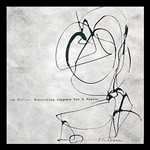
One thing that distinguishes Joe McPhee among improvisers is his certainty; he knows where he’s coming from and, whilst playing in the moment, knows just what to do. Like the title of this record says, Everything Happens For A Reason. And I do mean record; it’s a black vinyl LP, 482 pressed, with a lovely print by Judith Lindbloom hand-pasted onto the cover.
McPhee solo albums contemplate his roots at the same time that they extend them. Tenor captured one African-American man and his saxophone in a Swiss farmhouse, grappling both with the legacy of that most culturally freighted horn and the challenge thrown down by Anthony Braxton’s For Alto. Serious As Your Life used studio resources to play with notions of time and mulled over the maverick legacy chronicled in Val Wilmer’s book of the same name just as one century ticked over into another. Someone really ought to reissue Graphics and Rotation so that Dusted writers other than the good Professor Bivins can speak knowledgably about it. Everything Happens For A Reason is a concert recording of McPhee playing pocket trumpet, alto and soprano saxophones in Wels, Austria in 2003. Each of its six tracks is both a meditation on and an extension of the heritage of those who have touched him.
“Mythos” opens side one with a whisper, quite appropriate since it honors Bill Dixon’s often whispery trumpeting and pioneering organizational efforts. “Vieux Carré” remembers two Americans who played soprano saxophone and lived in Francophone cities, Steve Lacy (Paris) and Sidney Bechet (New Orleans). You can hear echoes of Lacy’s surety of line and Bechet’s earthy slurs, but McPhee manifests his own personality and virtuosity via mercurial but finely balanced shifts of sentiment and density. “Come Sunday,” on alto, dreams of two masters, the indefatigable solo performer Anthony Braxton and composer Duke Ellington. Breathy and deliberately paced, it uses voicings from the edges of the instrument’s range to radically reconfigure a historical artifact into a vehicle for personal expression; in McPhee’s lexicon, extended technique is never an end, but a means to summon strong and complex feelings.
Flip the disc over to hear the title track, which is dedicated to French saxophonist Daunik Lazro. Lazro and McPhee have been working together since the early ’80s, when both knowledge of the French scene in the USA and collaborations between American free jazzers and their European counterparts were at low ebb. McPhee’s alto playing places pure, exquisitely articulated notes and coarse, strangled cries within the same phrase, imparting a sense of tragedy that makes one worry about Lazrik’s wellbeing. “J2” honors McPhee’s father “Big Joe,” an accomplished trumpeter and his son’s first teacher. One wonders what pop would have made of his son’s resolute avoidance of the horn’s conventional vocabulary; most of this track is pitched in the tuba range, groaning broadly before shrinking to a whispery dance done round the microphone. The final track, “Voices,” is a personal standard that McPhee usually plays with another Frenchman, guitarist Raymond Boni. Here he also dedicates it to fellow saxophonist Joe Giardullo. This is the soprano showcase to pull out when anyone wants to know why McPhee should be permitted to stand with Lacy, Evan Parker and Roscoe Mitchell as titans of the straight horn. He flits across its range, swirling round an implied center, then slows down and zeros in on the melody like a dove of peace, negotiating brutal updrafts before gently landing on your shoulder. It’s a lovely end to a lovely album.
By Bill Meyer
|




 Oleo
Oleo