|
|
 |
Dusted Reviews
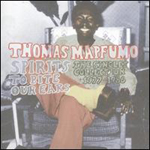
Artist: Thomas Mapfumo Album: Spirits to Bite Our Ears: The Singles Collection 1977-1986 Label: DBK Works Review date: Nov. 6, 2005 |
|
|
|
|
Thomas Mapfumo’s idea in the 1970s was simple but powerful: take the eloquent traditional Shona Mbira music of southern Africa, with its resonant interlock of thumb pianos and spirit medium vocals, and translate it to electric guitars, bass, and drums. That this invention took place at a time when the people of Rhodesia were fighting a war --called the Chimurenga (the struggle) -- against their British colonizers imbued the music with an extra immediacy. This was a rallying of ancient culture re-designed for the moment. And when the new country of Zimbabwe came to be, Mapfumo was seen as a culture hero and voice for independence, with a stature comparable, in his homeland, to that of Bob Marley throughout the African Diaspora. The name Chimurenga was attached to the style of music that Mapfumo parented and other bands took up.
The collection at hand helps fills a void left by the near-disappearance from the market of previous Mapfumo collections. It contains many of Mapfumo’s cornerstone songs, and taken as a whole, it shows the nuts and bolts of his approach at work. Before Mapfumo, Zimbabwean pop was built mostly from South African township jive, Congolese rumba, American soul, and a touch of reggae. Mapfumo’s long apprenticeship as a working musician included all those styles, and eventually they made their way into his music: “Tombi Wachina” has the lilt and swing of township music; “Madiro” boasts tight soul horns; “Makandiwa” is pure African reggae; “Madhebura” pulses with Franco-esque rumba filtered through the influence of the big Swahili dance bands of Kenya and Tanzania.
The disc, seemingly sequenced with musical flow in mind, shows all those influences at work. But it’s well worth taking the time to shuffle the track sequence and listen to the songs in chronological order. (Fortunately, Banning Eyre’s concise but informative track notes give chronology, context, and a synopsis of lyrics for each song.) The power of the original vision is undeniable: listen to the way the drummer's high-hat sizzles as it lays out the pulse that in traditional music belongs to the Hosho gourd rattle; the way brilliant guitarist Jonah Sithole-- co-creator of the Chimurenga style during the years represented here-- uses palm-muting, precise picking, echo, phasing, and a touch of distortion to lay out the Mbira (thumb piano) lines. Above this, Mapfumo’s hoarse and yodeling vocals are a commanding presence, telling stories and ancient proverbs amplified for modern times. (As a bonus, it’s a sonic treat to surrender to the house sound of Harare’s Shed Studios, where these tracks were cut: dry, up-front, well- defined mixes; a delicious chewy compression on the inter-woven, percussive guitars.)
The later tracks sometimes involve keyboards, backup singers, and bigger horn sections. But the essence and interlock remain the same, even as a more mature Mapfumo dares to criticize the new Zimbabwean government for its greed and corruption, its promises unfulfilled.
Mapfumo is still going strong: in recent years he has gone back to the source and incorporated the Mbira itself into his music. This collection offers a valuable look at the birth and development of a radical idea that quickly became timeless, and at one of the great styles of African music.
By Kevin Macneil Brown
|





 Hokoyo! / Gwindingwi Rine Shumba