|
|
 |
Dusted Reviews
Artist: The Back Door Men Album: Sodra Esplanaden #4 Label: Subliminal Sounds Review date: Oct. 5, 2005 |
|
|
|
|
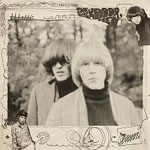
Nobody really knows why Sweden has become the land of retro acts. Almost every band that’s gotten any notoriety here in the US – groups like the Hellacopters, the Hives, Soundtrack of Our Lives, and, most recently, Dungen – draws more of its inspiration from the '60s garage than anything else. Even the hardcore band Refused would morph into the retro-flavored (International) Noise Conspiracy. When I asked Dungen frontman Gustav Ejstes about this recently, all he had to say was “I couldn’t tell you why they’re big here. It’s a good sound.” So clearly the popularity of the Swedish garage in the US is just one of those strange cultural phenomenons that we simply have to enjoy and not question why. I can say with all certainty, though, that the style originated in the early '80s in the town of Almhult, Sweden, and one of its major early figures was a group called the Back Door Men.
The group existed from 1983 to 1985, growing out of a band called the Pow and split into a pair of bands called the Daffodils and the Creeps, recording exactly five tracks in studio and releasing a handful of live cassettes. They, along with a few other bands, became the center of a small sect of Swedish mods who took the Who as a starting point and just went from there. They claim to be very much in the spirit of punk, but that probably derives more from the fact that the rest of world didn’t really know what to make of the Back Door Men and resorted to beating the crap out of them with any musical similarities they could find.
None of that antagonizing comes across in the music, though. On the studio recordings, they sound like they could be a (slightly cleaner sounding) Nuggets band (interestingly, Rhino didn’t include them in their recent Children of Nuggets box but did find space for the Creeps), though there is a bit of an '80s vibe hidden amongst the organ, Mick Jagger knockoff vocals, and reverby fuzz guitar. Every so often you get a tinge of the power-pop or new wave stylings, especially on the later tracks on the CD – “Another Way of Giving,” “Wasting Time,” “Never Take a Chance,” and “Inside Oute, Upside Down” in particular are '80s anthems that sound slightly mismatched in the context of the record. The Back Door Men’s greatest strength, however, lies in their ability to make a convincingly powerful recreation of a style that had been forgotten, at least to the people of Sweden. The fact that they released so little music is probably to their benefit, since garage rock was always a genre of singles rather than albums. And since garage rock is so specific in its sound, it’s hard to make it carry over a whole record. If songs like “Out of My Mind” or “Magic Girl” (both from their first single) were surrounded by lesser material, their charm would be lost. And that's ultimately why so many people listen to Swedish retro music here in the US: it’s charming.
By Dan Ruccia
|




 View all articles by Dan Ruccia