|
|
 |
Dusted Reviews
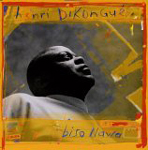
Artist: Henri Dikongue Album: Biso Nawa Label: Buda Musique Review date: Jul. 31, 2005 |
|
|
|
|
The work of Cameroonian singer-songwriter Henri Dikongue represents a style of African popular music akin to the Nueva Cancion of Latin America and the Nueva Trova of Cuba. It’s an approach based in local tradition, but also drawing freely from many aspects of North American, Latin, African, and European music, usually imparting a message that combines poetry, political statements and personal reflections.
Like Gabon’s eclectic balladeer Pierre Akendengue, or, from closer to home, the brilliant Cameroonian renaissance man musician/scholar/writer Francis Bebey, Henri Dikongue makes clear his belief that African cultures deserve parity with any and all others on the planet; that the creation of African art should not be limited to so-called “African” modes of expression. In Dikongue’s case, the music that results is, perhaps ironically, at its best when it transcends the various styles – Euro-jazz, light rock, pan-global pop – that it is packaged within; at its best when the emphasis is on Dikongue’s bittersweet and circular acoustic guitar patterns, his gently impassioned singing of his own graceful, lyrical compositions.
Dikongue has a rare gift for intimate, personal communication. “Anale,” with its mix of guitars, bass, percussion, marimba, and harmony vocal, gets the blend just right, telling a story of youthful love lost and wistfully remembered. “Esele,” an elegant statement of personal faith in dark times, is served perfectly by stark- but- sparkling harp arpeggios and rhythmically complex choral harmonies. On most tracks, studio veteran Etienne Mbappe’s sliding, loping electric bass is a welcome presence at the heart of the music. But all too often, Dikongue lets the balance of the sound slip too far toward the slickness of the Afro-Parisian studio sheen, with a pre-fab approach to arrangements, and guitar-and-keyboard-from-a-box sounds.
Despite the distractions of overly glossy production, Henri Dikongue’s real strengths ultimately shine through. He’s a troubadour, telling stories in song, delivering them with a quiet, compelling voice, as though he were sitting down right beside you with something – a message, a serene revelation – he just has to share.
By Kevin Macneil Brown
|





 View all articles by Kevin Macneil Brown