|
|
 |
Dusted Reviews
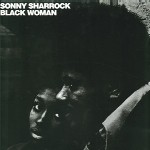
Artist: Sonny Sharrock Album: Black Woman Label: Water Review date: Aug. 3, 2005 |
|
|
|
|
What more can possibly be said about Sonny Sharrock? It is widely agreed upon that he is the greatest free jazz guitarist, period. He worked within the most important circles of the jazz world from the late ’60s until his death in 1994, playing with Dave Burrell, Norris Jones (a.k.a. Sirone), Milford Graves (all of whom appear on this record), as well as Peter Brötzman, Ronald Shannon Jackson, John Zorn, Miles Davis (he has an uncredited appearance on A Tribute to Jack Johnson), Byard Lancaster, Cecil Taylor, Pharoah Sanders, and Herbie Mann. Since jazz musicians are often judged more by who they played with than what they played, those credentials alone are probably enough to solidify his place in the out-jazz canon.
But who he’s playing with doesn’t even matter; Sharrock’s playing is so unique and powerful that it immediately demands attention. Less about chords and blues licks than bends, swells, swerves, tremolos, slides, and general mind-meltingness, he approaches the guitar as a purely melodic instrument. Even more impressive is his use of effects – there are none. Unlike many of the fusion guitarists of the time who needed their heavy distortion or phasors or wah-wahs or anything else, Sharrock is content to just let his guitar and amp talk.
This album marks his first as a bandleader. Herbie Mann, Sharrock’s employer at the time, encouraged his various sidemen to record their own records in order to let out any creativity that may not have found an outlet in his own music. As a result, this album was recorded and produced by Mann and originally issued by Mann’s Vortex label, and this reissue is its first domestic issue on CD (4 Men With Beards gave it a new deluxe vinyl pressing in 2001).
This record does make a certain amount of sense as a product of Herbie Mann. The entire album is concerned with melody. Says Sharrock, “Not many people talk about the melodicism of that era, but I heard a lot of it.” Unlike much of the fire music of the time, there is surprisingly little unrestrained free blowing on this album. Sharrock lets his entire ensemble (the players mentioned above plus his then wife Linda providing vocals) run free just once, on the tumultuous “Peanut.” The rest of the time, melody reigns supreme. These melodies are, however, being constantly tugged at, pushed and pulled by individual players, causing them to be constantly rethought. And because of the quality of the players here, the reaction time to these minute changes is almost instantaneous.
All, that is, except for Linda Sharrock. She is perhaps the most divisive aspect of this record, since most people either instantly love or instantly hate her voice. Her idea of free jazz vocalizing is a combination of vaguely melodic glosolalias and all-out screams. When she sits back and allows herself to be another instrument within the ensemble, she is remarkably effective, especially when mirroring her husband’s guitar. It is when she starts screaming that one has to wonder what exactly she was doing. Yes, it may be her releasing the fury in her belly in a vaguely musical manner, but it makes those tracks fairly unbearable. Sonny must have had his reasons for including her, and the rest of the record is pristine, so I see no reason in questioning his artistic intent.
By Dan Ruccia
|





 View all articles by Dan Ruccia