



|
|
|
|
|
|
|
|
|
|
||||||
| |||||
|
|
||||||||||||||||||||||||||||||||||||||||||
|
|
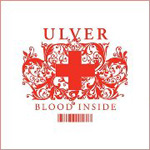
Ulver described 2000’s Perdition City as “music to an interior film.” Blood Inside, the Norwegian trio’s first proper album in five years, could just as well be described as “music to an interior passion play.” From the cover’s Red Cross logo to song titles like “For the Love of God,” “Christmas” and “Blinded by Blood,” the album is infused with heavyweight Christian imagery. The lyrics describe, from various angles, the cycle of birth and death and all the suffering in between.
To dramatize this play, Ulver creates a personal sacred music. Racks of synthesizers become 21st century church organs and heavily layered vocals majestic choirs. Maja Ratke adds her own chorus to “Your Call,” helping transform the piece into a kind of a radio play. An overture of strings, violent violin squiggles, a guitar, footsteps and Ratke’s chorus all swirl around an incessant ring-tone with Kristoffer G. Rygg’s vocal couplets.
Ulver deploys this highly developed collage technique throughout. They finely integrate a host of keyboard effects, sampling, tape manipulation, heavy doses of live and synthesized percussion, guitar and violin. “In the Red” turns itself inside out as jagged strings and a sample of swing-band horns runs backward, forward, then backward again, speeding up and slowing down. “Dressed in Black,” “For the Love of God,” “Christmas” and “Operator” use the technique to fuel their manic paces and create a helter-skelter energy rife with mental crisis.
Picking up on the medical allusions of the Red Cross, Rygg declaims on the album closer “Operator” that ”Truth is a hospital,” a place where we go not only to heal our sick bodies, but to experience the most mysterious acts of our life: birth and death. As a band, Ulver has also experienced its own cycles of birth and death, evolving from the black metal of its first three albums to ambient explorations to film scores. William Blake, a band favorite, gets quoted here, but more tellingly, “Christmas” features a text by the Gnostic Pessoa. The song closes with the line ”Don’t seek and don’t trust, for all is mystery.”
The line neatly limns Ulver’s development to date, and unfortunately crosses the line into pretentiousness, as it somehow gives the band permission to deploy all sorts of hackneyed effects as they evoke their “mystery.” The synthesizer coda of “It is Not Sound” is Bach, and Ulver uses plenty of pitch-bending to produce a passage that belongs on one of those collections where classical pieces are played on synthesizers. The effect is more kitschy than mysterious. “Blinded by Blood” utilizes a sample of what sounds to be a black man singing about Jesus, a trick Moby burned down long ago.
Vocal echo is used to numbing extreme, and always on the really big, important words, like on “In the Red.” In other pieces they ask such profound questions as ”Is a vampire in the mirror eternal?” and ”What is it all about?” This is teenage poetry masquerading as modern Gnostic insight.
The real question here is how interesting is it to listen to someone else trumpeting grandiose internal spiritual beliefs. Megalomania makes equal the chances of succeeding mightily and failing spectacularly. Blood Inside’s successes do not, unfortunately, support the pretentious weight of its failures. By Matthew Wuethrich
|
||||||||||||||||||||||||||||||||||||||||
|
||||||||||||||||||||||||||||||||||||||||||
| |||||


 View all articles by Matthew Wuethrich