|
|
 |
Dusted Reviews
Artist: Stephan Mathieu Album: The Sad Mac Label: Headz Review date: Jul. 25, 2005 |
|
|
|
|
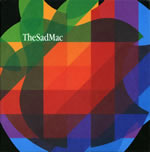
For Johann Sebastian Bach, the well-tempered clavier was both a muse and a means to express an artistic vision. The Sad Mac’s titular computer is, for Stephan Mathieu, a more complicated inspiration; he dedicated his fourth solo album to “the sheer weight of hardware troubles I’ve endlessly experienced with a series of computers throughout the past three years.” He hasn’t given up on computers, nor completely divorced himself from the laptop sound world’s snaps and crackles. But he has foresworn most of the digital sound processing software that makes that laptop sound world so homogenous in favor of a considerably broader array of methods and material.
Consider the album’s opening gambit. “Anakrousis,” a fairly typical fizz of sound files sourced from Jacques Tati movies and processed with Lisa software, lasts just 10 seconds. Then “Theme for Oud Amelisweerd” commences with the rumble of a passing automobile, a concrete declaration that Mathieu is putting his DSP ways in the rear-view mirror. The piece, which was recorded live in Paris, goes on to explore the resonance of George Friedrich Handel’s’ violin sonatas at length. It’s the mirror opposite of the previous track’s instant splatter, an immersion in pure, gorgeous sound. It’s followed by “Nibbio,” which works the same taffy-pulling magic on vocal and wind sounds. This leads us to one of Mathieu’s most appealing musical qualities – his attention to tonal and textural beauty.
Still, Mathieu doesn’t shrink from challenging the listener. Consider “Smile.” It’s not the Beach Boys tribute you might expect given the name, but a purposeful attempt at engagement; according to Mathieu’s liner notes, “During painting a portrait, bards and acrobats were in attendance to counteract the model form sinking into melancholy.” Mathieu explores this challenge literally by whimsically superimposing the voice of a waiter reading from an Italian text and some randomized keyboard flicker, which are presumably the necessary distractions, upon the static pump organ drone that represents threatening tedium. There’s also a lute in there somewhere, according to the annotation, but I can’t find it.
The day is probably close at hand when people will pay less attention to the fact that a musician plays a computer than they will to the music they produce. What will hopefully remain is an interest in processing sounds, and two versions of “Tinfoil Star” position Mathieu as a guy to keep watching in this regard. The first streams sustained viola notes through an old Mac; the second transforms the same material by playing it on an Edison Fireside phonograph, turning it into something you might hear on a Philip Jeck record. Together they establish a link between the dawn of recorded sound and its latest technological manifestations.
By Bill Meyer
|




 On Tape