|
|
 |
Dusted Reviews
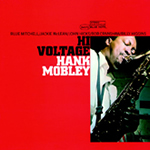
Artist: Hank Mobley Album: Hi Voltage Label: Blue Note Review date: Jun. 16, 2005 |
|
|
|
|
Hank Mobley was never an innovator or a star, but he was more than just a journeyman. The tenor saxophonist made adroit contributions to the Jazz Messengers, Miles Davis’s early ’60s band, and many celebrated Blue Note sessions. Blue Note rewarded him with numerous recording opportunities of his own, which provided an outlet for his prolific, if not exactly groundbreaking writing. This album, which was recorded in 1967, shows how he stood up under the pressures that every jazzman felt in the late ’60s. Sales were dropping and clubs were closing as the music lost its youth audience. Mobley responded by carrying on with business as usual; no one on this sextet session colors very far outside the lines of hard bop.
The title tune is a boogaloo in the tradition of Lee Morgan’s “Sidewinder,” so much so that trumpeter Blue Mitchell takes the first solo rather than Mobley. Each soloist minds both Mobley’s catchy melody and Billy Higgins and Bob Cranshaw’s marvelously funky beat, making this the sort of attractive and memorable tune you could play to someone who thinks they can’t handle jazz and walk away with a convert. “Two And One” picks up the tempo; pianist John Hicks’ accompaniment around Mobley’s solo has the same ornamental, framing quality as the work McCoy Tyner did in Coltrane’s quartet during the early ’60s. But even here alto saxophonist Jackie McLean, who had taken to the avant-garde by the time of this recording, keeps his playing centered and to the point. Mobley’s tone on his tenor tended towards lightness; he uses that quality to good advantage on the ballad “No More Goodbyes,” sounding at once pleading and intimate.
And so it goes; “Advance Notice” swings the meter back towards jukebox-friendly funk, “Bossa De Luxe” is a romantic Latin tune that showcases Mitchell’s way with a tune, and “Flirty Girty” closes things out in upbeat fashion. Hi Voltage may not be as electrifyingly radical as the groundbreaking work of its age, but taken on its own terms, it’s highly satisfying.
By Bill Meyer
|





 View all articles by Bill Meyer