|
|
 |
Dusted Reviews
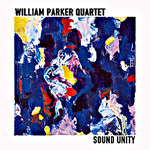
Artist: William Parker Album: Sound Unity Label: AUM Fidelity Review date: May. 4, 2005 |
|
|
|
|
In terms of parlance, Sound Unity is nothing new on the surface. The phrase has been in circulation amongst denizens of the Lower East Side jazz community since before an event of the same name back in the summer of 1984, curated by Peter Kowald and William Parker as a progenitor of the Vision Festival. Parker coins it again here as the title of his quartet’s sophomore effort and it’s a fitting encapsulator of the inclusive philosophy undergirding the music. The bassist’s well-publicized utopian ideals transmit from the printed page of the disc booklet directly to the communal interplay of the quartet. Their debut album, O’Neal’s Porch, was a surprise bell ringer, selling out its first printing and earning enthusiastic accolades among longtime fans and neophytes alike. The sequel trades studio environs for concert stages in Vancouver and Montreal in front of adulatory audiences without sacrificing any fidelity or immediacy in the switch. If anything, this second offering sounds even better than the first.
Just as the disc’s name has a history, so too do the players share a tangled weave of common threads. Altoist Rob Brown and Parker have gigged together going on decades. The bassist shares similarly deep-rooted relationships with drummer Hamid Drake and trumpeter Lewis “Flip” Barnes. As the anchor and fulcrum of the group, his instrument draws regularly on these strong ties, tethering the band not only rhythmically and harmonically, but also melodically. One of the observations levied most often at the band is how closely they align with more conventional jazz customs. A heads-solos format remains a regular component of the repertoire, so much so that the set should readily serve as an ironclad reminder to inveterate skeptics that these men most certainly can muster top-flight “mainstream” jazz chops on a whim. But the four also find occasional room to roam in their more habitual haunts of atonality and emancipated meter.
Drake parses a fibrillating dub beat in league with Parker’s plump pizzicato on “Groove #1,” the horns gliding above. His coruscating solo on the otherwise longwinded title piece never jumps the track, exemplary of his special nonpareil style of stick play, as muscular as it is meticulous. Brown refracts the essences of Jimmy Lyons and Eric Dolphy through his own polished alto bell, reeling off improvisatory shibboleths that exploit the full tonal range of his horn from incisively tart to tenderly plush. His rollercoaster foray on the Ornettish “Wood Flute Song” registers as but one of several striking extended statements. Barnes capitalizes on a similar command, veering from the mustard tang harmonies of “Hawaii,” a piece penned by Parker in honor of deceased saxophonist Frank Lowe, to the gelid cool of “Harlem” and switching gears accordingly. If a reason to cavil does exist, it could reside in the niggling notion that these four could play much of this music in their sleep. They make the enterprise seem so easy. Subjective effortlessness aside, this set remains packed with highly potent freebop executed by a band of gifted brothers operating at the top of their collective craft.
By Derek Taylor
|




 Raining on the Moon