|
|
 |
Dusted Reviews
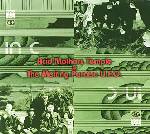
Artist: Acid Mothers Temple Album: In C Label: Squealer Review date: Jun. 4, 2002 |
|
|
|
|
In C refers to a hugely influential 1964 piece by minimalist composer Terry Riley, in which an indeterminate number of performers, guided by a steady pulse, play from a group of motives that revolve around the key of C. Each musician gets to choose when to move on to the next motive, so the piece becomes a dense, ever-changing, pulsating sound that ends when all the performers have played all of Riley's motives. Riley's work revolted against not only the opposition to repetition prevalent in the world of classical music, but also classical music's tendency to view the performer and the audience as separate entities: Riley's "In C" doesn't require great virtuosity to play, so performances can be communal.
Acid Mothers Temple's version of the piece, which begins with Terukina Noriko playing the first few motives on a glockenspiel, is recognizable for about two minutes. Then the rest of the band enters, turning the piece into a sky-gazing krautrock-y jam. This move probably breaks all of the few rules that Riley established for performers of the piece, but it feels weirdly reverent because AMT recognizes the features that made Riley's work important. This is repetitive, after all, and it's performed with such a sense of spontaneity and joyful abandon that the effect would be similar whether six musicians or twenty were playing it.
These senses of spontaneity and abandon are two of AMT's most important features. Acid Mothers Temple draws on a huge canvas with fluorescent paint; its music is wild, expansive and often ridiculously loud, like on the stomping "In E." But it doesn't feel cartoonish, thanks to the group members' ability to filter many different kinds of music-- psych, krautrock, minimalism, drones (check out the gorgeous sustain on “In D”)—- while showing plenty of love for the records that inspired them but without strictly emulating any one band or musician. So it's easy to get immersed in In C the album, which is layered and free-flowing in a way that feels like it's spiraling off in a thousand directions at once. AMT's music is so dramatic, texturally rich, and, well, big that it creates its own world: when heard in the right frame of mind, Acid Mothers Temple feels like the only band in the universe that matters.
By Charlie Wilmoth
|




 Electric Heavyland