|
|
 |
Dusted Reviews
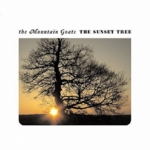
Artist: The Mountain Goats Album: The Sunset Tree Label: 4AD Review date: Apr. 26, 2005 |
|
|
|
|
Once upon a time, the “Profiles” section of the New Yorker offered a fascinating look into the biographies of the famous, like Johnny Carson, and the not-quite-as-famous, like David Brower, former executive director of the Sierra Club. I’ve always thought John Darnielle, who records as the Mountain Goats, would be a good candidate for an in-depth literary profile. At first, this judgment was simply a reflection of his being a square peg in the round hole of the indie rock world. Darnielle has always written with a greater attention to descriptive detail, narrative perspective, semantic coherence, and similar critical concerns than any other underground artist, or any of the folk songwriters of previous eras. Yet he also recorded these songs on a department store boom box, leaving his carefully considered lit-rock at the mercy of his ultra lo-fidelity equipment. Plus, with a steady job as a psychiatric nurse working with abused children, a website on which he used close-reading techniques to dissect gangster rap and hair metal, and a fairly nonchalant public persona, he stood outside the traditional rock and roll lifestyle. Darnielle’s biography has only gotten more interesting, however, with his last two releases, We Shall All Be Healed and now The Sunset Tree. Both are autobiographical albums about his early life: We Shall All Be Healed recalls Darnielle’s time amongst a circle of meth users, and the 13 songs on The Sunset Tree describe Darnielle’s childhood, in particular the years of physical abuse he suffered at the hands of his stepfather. It’s ironic, to say the least, that John Darnielle has been so prolific for so many years and yet we are just learning that he has so much to say.
Since 2002’s Tallahasse, his first record for 4AD, Darnielle has left behind the boom box and begun recording in a studio. The Sunset Tree and We Shall All Be Healed were both produced by John Vanderslice, and fellow Mountain Goats on this record include cellist Erik Friedlander and bass player Peter Hughes. The studio proficiency helps. Whereas on, say, All Hail West Texas one might notice that the lyrics tell an interesting or funny story while the music depends upon a fairly simple chord progression, now one notices that the songs have space for cello and piano and are, in truth, really good. “This Year” has an addictive bass run, while “Magpie” is a duet for a guitar and what sounds like a mandolin.
As always, however, Darnielle’s songs are just showcases for his lyrics and his own slightly nasal singing. He’s forthright with the details of his youth, shifting back and forth between descriptions of his stepfather’s attacks and his internal responses. “I’m in the living room watching the Watergate hearings while my stepfather yells at my mother,” he sings on “Dance Music,” “launches a glass across the room straight at her head,” and he runs upstairs to the sanctuary of his record player: “So this is what the volume knob’s for?” On “Hast Thou Considered the Tetrapod,” he reminds himself that he will, eventually, make it out of his house alive: “Held under these smothering waves by your strong and thick-veined hand / but one of these days I’m going to wriggle up on dry land.” The Sunset Tree’s final song, “Pale Green Things,” may be the most complex. Shortly after learning about his stepfather’s death during a phone call with his sister, he flashes back to a different memory, a visit to a racetrack in southern California. “I turned it over in my mind, like a living Chinese finger trap.”
Just like We Shall All Be Healed, The Sunset Tree is worlds removed from the days when John Darnielle was following fictional characters through the “Going To…” series, or writing about teenage metalheads. For a musician who has built a fairly sizable following telling those sorts of stories, he’s making a bold move by switching to more autobiographical work. Novelists, however, tend to write their memoirs once they’ve honed their storytelling abilities through fiction. Clearly, John Darnielle has a life story that’s inspiring as more than just the tale of an unconventional indie rock hero. Now that he’s making his best music, I think we can all be glad that he’s finally telling it.
By Tom Zimpleman
|





 All Hail West Texas