|
|
 |
Dusted Reviews
Artist: Montag Album: Alone, Not Alone Label: Carpark Review date: Mar. 7, 2005 |
|
|
|
|
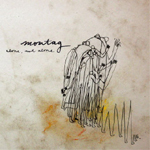
At first Alone, Not Alone emits the same kind of polished sheen as Air. But unlike the French duo’s sugar rush artistry, the careful constructions of Montreal-based Antoine Bédard reveal nourished depth, in music and in sentiment. As Montag, Bédard builds a quiet storm of click’n’cut percussive effects, ringing keyboards, pillow-talk bass, melodramatic vocals and an orchestra’s worth of acoustic instruments. Over 37 minutes, abstract designs, pristine melody and understated rhythmic panache hang together harmoniously.
Bédard compresses this swirl of colors into pop-length songs, all of it so deftly balanced that identifying individual sound sources becomes nearly impossible, like an antique music box dusted off and supped-up for the digital age. On the cinematic “Figures of a New Color,” a lush string theme fights toward the surface while a wash of noise and ragged sonic debris constantly threatening, and sometimes succeeding, to overtake it. On “Angles, Country and Terrain Connu,” chanteuse Amy Millan rides the infectious interlocking groove of clicks, shakers and bass until the song abruptly disintegrates, pauses, then rises Lazarus-style back to buoyant life.
"Grand Luxe" and “Perfect Vision” contain what may be Montag's most unique, and problematic, element. The pieces feature male/female duets that evoke the sung dialogue of movie musicals, both in cadence and lyrics: the former occasionally stiff and speech-like, ("You believe you've seen everything," says Ariel Engle. "What did you say?" answers Bédard. "I wasn't listening."); the latter unabashed in sentimentality, wavers dangerously close to self-help. ("Keep your visions closer. Bring those brighter colors" "Change things for the better.")
Yet in their naiveté, they shine a light on Montag’s intent to crossbreed nostalgia and the horizon, familiarity and experimentation. “Turn dark thoughts into light,” sings Millan on "Perfect Vision." “Put all the pain out of sight / Take me away for awhile.” And take her away Bédard does, washing away any concrete meaning with an ambient collage of rainfall, puddles and bright round organ tones. The two sound sources pull at each other, one identifiable, one abstract. Recognizable instruments appear, electronic colors overtake them and vice versa. Halfway through “Time Difference II” Bédard swaps flutes and a live cymbals/snare beat for a synthesizer and drum machine, then weaves everything back together into a dense, euphonious climax.
Bédard himself sings on “All I See,” his voice low and husky like David Sylvian’s. Much of Alone, Not Alone recalls the way Sylvian mediates pure sound and song structures, never committing to either and somehow finding a third, sublime path. A short piece like “Motif” shows Bédard toying with a melody fragment that begs to be developed. Yet if he did, the piece, and the album, would surrender its ephemeral, tip-of-your-tongue pleasure.
By Matthew Wuethrich
|




 View all articles by Matthew Wuethrich