|
|
 |
Dusted Reviews
Artist: Mull Historical Society Album: Loss Label: XL Review date: May. 14, 2002 |
|
|
|
|
Everybody loves a good regional rock personality. The idea that in some far-off backwater nowheresville, some guy or gal is hammering out amazing songs is a romantic notion. It’s really the American Dream of rock and roll: one day, you hear a David Bowie song on the radio and decide to record your own music. Years later, you’re discovered, and you’re Robert Pollard. What’s perhaps most interesting about the music that comes out of circumstances like these is hearing well-worn genres filtered through a particular regional perspective, such as Pollard’s Midwestern take on British Invasion rock, or East River Pipe’s housebound-in-Queens pop.
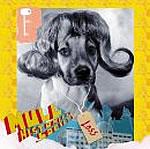
A recent addition to this fine tradition in rock and roll is the band Mull Historical Society, who have just released their debut album, Loss, to a generally positive response in Britain. MHS is actually a man named Colin MacIntyre, who hails from the Isle of Mull, off of Scotland’s west coast, a place surely as remote and removed as one could expect to find. Apparently, MacIntyre was still able to get his hands on a copy of Diamond Dogs, and has produced an album melding various British rock influences, from Nick Drake’s mellow balladeering to Freddie Mercury’s taste for theatricality. After a lengthy obsession in my teenage years with suburban rock savants such as Pollard, I now have a slight aversion to the whole idea, especially as much of the music to come out of the genre in recent years has been substandard. That said, the cover art for Loss has a picture of a dog wearing a wig, so I’m willing to give it a chance.
On first listen, much of the album seems a touch familiar, like a collaboration between the Flaming Lips and Badly-Drawn Boy. After a few listens, however, some gems start to shine through, and it becomes clear that despite his remove from the fast lane of popular culture, MacIntyre has managed to ingest a serious amount of music. Strings, keys, various electric and acoustic guitars populate the mix, along with MacIntyre’s serviceable voice and some weird sound effects. When it’s all regurgitated in the right way, he can create some nifty pop numbers, like the chirpy, keyboard-driven “Watching Xanadu”, which I sincerely hope is about the Olivia Newton-John rollerskating musical. The film Xanadu, for those who haven’t seen it, features Fred Astaire (in his final role) as a nostalgic dancer and Newton-John as a muse sent down to earth by Zeus in order to inspire a record-cover artist to open a kickin’ club called Xanadu. The climax of the film, featuring close to twenty minutes of roller-skating, dancing, and lip-synching is possibly one of the most enjoyable slices of film frivolity I’ve ever witnessed. It seems to me that MacIntyre is the kind of person who would watch a film like Xanadu and take genuine pleasure in its strangeness and absurdity, as opposed to those who might watch it just for ironic laughs. This may be a meaningless distinction, but I think that distinctions like these provide fundamental insights into the way that people see the world. That said, I wish there were a bit more of Newton-John’s Xanadu in MacIntyre’s “Xanadu”. He possesses obvious talents, but a bit more looseness and absurdity, like the aforementioned photo of the bewigged-dog on the cover, could be useful to his songcraft. However, this is his first effort, and overall it’s a pleasant, catchy pop album, one that holds promise for the future. British rock music is currently in the thrall of either American rock revivalists like the White Stripes, or pretentious 70s revivalists like Starsailor, and this contains a healthy dose of eclecticism which is lacking from both these musical tangents.
Other standout songs include the driving, melancholy “This Is Not Who We Were” and the synth-drenched “Animal Cannabus”, which I would like to think is about sheep smoking pot. Since MacIntyre does hail from such a strange and far-flung place, it might do him good to root his songs closer to home, rather than in the collective pool of classic rock romanticism like so many rural bedroom rockers. If he hasn’t written a song about sheep ingesting drugs, then he should. This is only a suggestion, but I think it holds strong possibilities.
By Jason Dungan
|





 View all articles by Jason Dungan