|
|
 |
Dusted Reviews
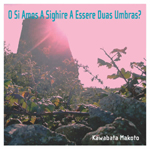
Artist: Makoto Kawabata Album: O Si Amos Sighire A Essere Duas Umbras Label: Important Review date: Jul. 20, 2004 |
|
|
|
|
Whilst staying in Sardinia, off the west coast of Italy, Kawabata Makoto (leader of the prolific psychedelic Japanese collective Acid Mother’s Temple) had something approaching an epiphany, what he would later describe as “a spiritual climax.” What this entailed exactly, like all good myth creations, was kept fairly vague, but Kawabata states that these recordings represent one of the most important moments of his life and form a tribute to the place of its genesis.
O Si Amos Sighire A Essere Duas Umbras, which roughly translated means, Are We To Continue As Two Shadows, is comprised of two epic pieces, both deeply meditative and transcendental compositions, but also two very separate entities. The first track, Ses aintro ‘e mene finzaz si ses in s’atter’ala e su mundu, begins quietly enough with only the occasional Bailey-esque chord shape intervening. It soon enters into a more sustained series of chimes and string driven mantras, which recall the minimal psychedelic folk of Makoto’s sometime colleague, Richard Youngs. Using only an acoustic guitar, three reverb units and a delay machine, Kawabata traverses a huge amount of sonic territory, all compelling, before bringing the whole thing to a blissful shimmering wall of reverb soaked sound.
On the almost 45-minute title track, Makoto swaps his acoustic for an electric guitar, conjuring a wondrous minimal drone along the lines of Tony Conrad’s violin work; it draws the listener into its sonority, creating a tranquillity that begins to take over and numb the senses. The magnitude of Makoto’s self-discovery is driven home by the calmness of this ocean. Floating on a silver sea, the piece gradually glides its way up to the heavens, before returning once more to the water's translucence.
By Spencer Grady
|





 I'm Here Still Now (Live at La Chapelle)