



|
|
|
|
|
|
|
|
|
|
||||||
| |||||
|
|
||||||||||||||||||||||||||||||||||||||||||
|
|
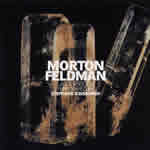
There are a number of immediate problems that arise from Sub Rosa’s recent repressing of Last Pieces, a collection of Morton Feldman’s piano work. The first problem being the somewhat misleading title Last Pieces, which in fact refers to a piece of Feldman’s earlier piano work dating back to 1959; a potentially important discrepancy for a casual Feldman listener. Though the recording does include Feldman’s last solo piano piece, it is by no means a collection of late period Feldman. For the non-casual Feldman listener, this release poses even more critical concerns, namely Stephanie Ginsburgh’s performance and its place among an abundance of already-available recordings of the same Feldman pieces. Many feature the pieces represented here quieter and/or slower, or in other words, more in line with Feldman’s vision.
Ginsburgh’s performance was recorded in 2001, and therefore lacks the supervision of Feldman himself, unlike Aki Takahashi’s performance on the Mode label. Ginsburgh’s performance also can’t make claims to Tilbury’s nuances on the definitive All Piano collection, as Tilbury is certainly a seasoned veteran of Feldman’s music, and his devotion, if not clear in the scope of the 4-CD set, is certainly clear in the music itself. Ginsburgh’s performance does no insulting disservice to the music, however, and in accordance with Feldman’s aesthetics, the timbres and resonances are full, simultaneously bell- and bird-like. There may be nothing that truly sets Ginsburgh apart, but perhaps that is a compliment to her adequacy in performing music that aims for such quietude and stasis.
Regardless of commercial and performance issues, Last Pieces is an effective compilation of strong Feldman pieces. “Palais De Mari” is Feldman’s last solo piano work and one of his most repeatedly performed, and considering Feldman continually became more lucid with his work as his life progressed, it’s no mere footnote to his lasting love affair with the piano. The other pieces here, in fact, showcase Feldman’s consistency over time, suggesting that “Palais De Mari” was the work latent in his piano compositions all along. By the time Feldman composed “Last Pieces” in 1959, he had made clear his decisive preference for low and soft dynamics, though he still seemed unsure about what would become his signature style, evidenced here by movements divided into the following categories:
slow. soft.
It’s a beautiful way to set up the piece, in that it makes a clear dramatic crescendo in terms of speed, while recessing into inaudibility in terms of dynamic. One wonders why Sub Rosa wouldn’t separate the last two movements into separate tracks. Ginsburgh, also, unfortunately does not address the requested change in pressure. Obviously, Feldman’s sensitivity to the difference between quadruple and quintuple pianissimos (triple pianissimo often being as quiet as most composers get) isn’t felt by each performer, but either due to Ginsburgh’s piano playing or the recording, the dynamics seem to be at an extremely even-keel throughout the entire release. Also of note in “Last Pieces” is the opening, distinctly jazz-tinged cadence. In such a small gesture, Feldman reveals the most minuscule fragment of New York in the ’50s, a small touch of representative music instead of complete abstraction; an unintended accident that somehow proves Feldman’s work didn’t exist in a complete cultural vacuum.
“Intermissions 6 for Two Pianos” is also included, which is somewhat inexplicable. There are no other pianists besides Ginsburgh credited on this Sub Rosa release, and it seems like it would be an utter tragedy for Ginsburgh to do an overdub rather than perform it in a duet relationship as Feldman intended. Despite this, the piece fits nicely into the overall design of the release, in that it shows Feldman’s commitment to his aesthetic over time (a point just as easily contested: his early work was in many cases far more prickly and dissonant than the pieces represented here). For this, Last Pieces is a decent collection of Feldman’s work, but certainly not a necessary one. By Matt Wellins
|
||||||||||||||||||||||||||||||||||||||||
|
||||||||||||||||||||||||||||||||||||||||||
| |||||


 Violin & String Quartet