




|
|
|
|
|
|
|
|
|
|
||||||
| |||||
|
|
||||||||||||||||||||||||||||||||||||||||||
|
|
Honky-Tonkin’ emerged during a very different era in underground music; a time when the network of independent labels and venues in America was fragile at best; a time that saw incredible bands put out amazing albums that almost never got heard at the time due to poor distribution, band poverty, and/or inability to play to a receptive audience. A much tougher world for independent musicians, the scene’s Darwinian hardships ensured that only the most committed of bands ever had a chance at reaching a decent-sized audience.
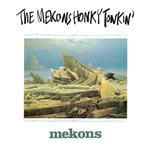
It’s funny, then, to imagine the sight of the Mekons plying America’s backroads in search of gigs and a welcoming American audience. Although they emerged from northern England’s classic late-’70s punk scene, the Mekons were odd birds from the start, and by Honky-Tonkin’, their third album, they were already fully indulging their jones for classic Americana, channeling Hank Williams, the Band, and Emmylou Harris through the cracked, threadbare existence that was England before Thatcher. This album, their first official US release, emerged in 1987, just as bands like Sonic Youth, Dinosaur, and R.E.M. were really beginning to take hold, marking either the beginning or the end of a golden era, depending on one’s perspective.
As such, critics and fans were both a little more keyed-in at this point, and some people actually noticed what the Mekons were doing. Their arty, strange country-punk was, if nothing else, distinctive, and through their early tours the Mekons were able to build a fairly committed fan base. And although they never made too many more fans after their initial visits, the Mekons have managed to remain influential through their relentless stubbornness and inventive songwriting.
Fittingly for a band who reformed in 1984 in order to support the miners’ strike, the Mekons were thoroughly political from the start, although theirs was always a rather DIY take on the subject. The Mekons are a band who love country music and quote Hank Williams on their record sleeve, but they’re also a group who cite Wittgenstein and the journal Radical Philosophy in their liner notes. Almost intractable contradictions shudder through the Mekons’ music, and yet it usually works. Songs like “Sympathy for the Mekons” manage to successfully marry country-rock to lyrics like: “There goes the devil riding on a nun / He’s a man that deals in the facts of life / In all his 10,000 years / I think I backed a winner / Lust / Fever / Plague / Chief Constable back on our head now.”
Some songs, particularly those sung by Sally Timms, have a near-classical, stately beauty that wends its way through her surreal, disjointed tales. Other tracks remain rooted in a punk-style, shouted delivery, despite their tendency towards twang. That these often awkward elements are never fully resolved is ultimately to the album’s credit; despite their punk roots, the Mekons’ material here is a brazen departure from most of punk’s musical style, if not its ethos. Ultimately, it is Honky Tonkin’s powerful sense of risk that defines it as a punk album, a document made by people who had already realized punk’s limitations and decided to push on, whatever the consequences.
On this, their third album, the Mekons re-imagined country music as the original punk rock, a fiercely honest and human response to the complexities of 1980s Britain. By moving outside their initial context, the band is able to more freely inhabit different characters and situations, drawing a much more varied portrait of their era than other bands were capable of at the time. As a result, the album sounds both deeply of its time and rootless, a mutable piece of art that still packs a surreal punch today, when it is just as puzzling to us as it must have been to listeners in 1987. Probably one of post-punk’s essential albums. By Jason Dungan
|
||||||||||||||||||||||||||||||||||||||||
|
||||||||||||||||||||||||||||||||||||||||||
| |||||


 Fear and Whiskey