|
|
 |
Dusted Reviews
Artist: The Rosebuds Album: Make Out Label: Merge Review date: Oct. 15, 2003 |
|
|
|
|
Effective pop music requires a few things: melody, energy, emotion, (a hint of) sex. But perhaps most importantly, it needs reference, a stylistic and conceptual context that roots it squarely in some preconscious part of the listener’s brain, eliciting equal parts youthful exuberance and nostalgia. This reference can be rooted anywhere, and its location says a great deal about both the group and the zeitgeist. For the Ramones, punk rock wasn’t merely something you made with loud guitars; punk was meant to save rock by reinvigorating what had been lost by ’70s bloat: innocence, melodies, simple songs. Their music is so undeniable because it taps into our memories of early pop while completely reenergizing the sound.
The Ramones made unforgettable music, but their move raises larger questions about the nature of pop. Recycling is nothing new, and we’re forever lamenting the lack of originality in contemporary music’s hall of mirrors. But is that what we really want? Do we need pop to confront our darker fears and emotions? The fertile underground of the late ’80s and early ’90s saw punk and pop coexisting with any number of other genres, all depending, in one way or another, on a reference to the past. But bands like Hüsker Dü, the Replacements, and Superchunk also realized that “pop” could be anything, that a song could talk about serious stuff and still make you dance.
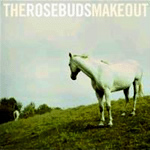
For a time, Superchunk’s influence was evident in the masses of ‘Chunk clones in college towns across the country. For many up-and-coming strummers, Superchunk is pop, a blueprint to be expanded upon, as essential as the Ramones or R.E.M. The Rosebuds clearly know their Superchunk, but they’re reaching further back, attempting to tap into pop’s beating heart. There’s plenty of “whoah-yeah!” on Make Out, and lots of girls and boys, as the album’s title implies. The melodies owe a great deal to Motown’s golden era, with an emphasis on short, razor-sharp melodies and memorable hooks. Kissing, wishing, loving, and losing are recurrent themes on the album, which aligns itself with both classic ’50s pop and the indie rock the Rosebuds have presumably grown up with.
It’s largely a winning combination, with only a few incongruous moments. Singer Ivan Howard has a warm voice with an inflection that sounds like he’s listened to a lot of Echo and the Bunnymen. The arrangements are short and tight, with rich production provided by Brian Paulson (Superchunk, Spinanes). The record is also catchy and driving enough to make you mostly forget about the questions raised by music like this. Namely, is it healthy for us to listen to music that celebrates adolescent emotions and juvenile notions of love and human relationships? The answer is probably “no”, but then rock’s never had a thing to do with being healthy, and the Rosebuds seem to be slyly undercutting their own premise with dark, cautionary tales buried in their deceptively sunny melodies. Bouncy refrains tell stories of drunk sorority girls robotically pursuing cheap sex, whispered verses describe the destructive effects of nostalgia and booze. A good example is “Signature Drinks”, an unassuming song about a man in a bar: “In the happy hour / He came alive / And he killed the coward inside… / In the happy hour / He came alive / And she lost the power to fight.”
This kind of dissonance, particularly in the album’s meatier second half, is what keeps Make Out from sinking into either pop cliché or gratuitous self-pity. The Rosebuds are smart enough to embrace their influences while coyly cutting them down, as they do on “Make Out Song”, the album’s closer. A slow, almost droning track anchored by a deeply pulsing bass and barely-there percussion, the song details a long-time couple coming to terms with the realities of love, trying to see each other for who they really are while maintaining an emotion which has gotten complicated and strange over the years. It’s a beautiful, ambiguous song, full of mixed emotions and a bruised optimism. Which is surely something we can all relate to.
By Jason Dungan
|





 The Rosebuds Unwind