|
|
 |
Dusted Reviews
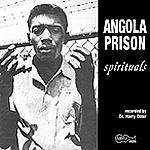
Artist: V/A Album: Angola Prison Spirituals Label: Arhoolie Review date: Oct. 6, 2003 |
|
|
|
|
If polled as to the last place on earth they’d like to be, after serious deliberation, most people would probably put prison at the top of their list. And among prisons the location with the longest and most fear-inducing lineage is undoubtedly the Louisiana State Penitentiary at Angola. Even such modern incarceration monoliths as SuperMax cannot compete with the terrifying shadow of this American institution. Life on The Farm was and remains as tough as it gets.
Angola's name itself holds blatant connotations of subjugation with origins in slave and agricultural antecedents. A former cash crop plantation, its many acres of harvestable land still conscript an inordinate number of African-Americans. Gathered on Angola Prison Spirituals, folklorist Harry Oster’s recordings bring up a thought-provoking question. If an artist has committed criminal and unconscionable acts, does the merit of his or her work necessarily suffer as a result? There’s a tendency to romanticize recordings like these. To place the performers under a halo of innocence, insinuating that their sentences were the result of racist trumped-up charges. The validity of these claims can hardly be known and seems secondary to the physical and psychological abuse almost certainly heaped upon these convicts by their captors. The effects suffuse these spirituals, lending them a somber sorrowful lineament that can be at times harrowing, at others redemptive in its power to transcend the coarse realties of confinement. Sometimes lasting art is attainable under the most adverse and fettering conditions.
When Robert Pete Williams sings of heavenly succor on “Dyin’ Soul”, stark anguish mixes with a faith-centered certainty that a better plane of existence lies beyond this mortal coil. The sound of mellifluous songbirds intermingles with the final strains of his spidery-plucked guitar suggesting that someone on high just might be listening to his plea. Williams’ presence is the most pervasive and his voice and/or guitar surface is on eight of the 22 tracks, sometimes providing studied accompaniment for other singers such as the rich-throated Andy Mosely on “I’m On My Way”, and the deep baritone Tom Dutson for “Little School Song”. Robert “Guitar” Welch adds ringing slide flourishes to a reading of “What Shall I Do”, showing himself to be a proficient instrumentalist and a rousing singer.
Vocal quartet and full choir pieces mix with the solos and duets creating a welcome variety in content and mood. “Rise and Fly”, sung by an anonymous group, weaves layered harmonies and call-and-response in a tale of a terrible crime perpetrated and the penal consequences received. But not everything here is morose and disconsolate. There’s a palpable power in many of the pieces that bespeaks of the human spirit to find peace of mind in a shared and celebrated creed. The Reverend Benjamin E. Osborne, leading an unidentified congregation, evokes “The Old Ship of Zion” as a vessel to lead his flock beyond the pinions of the prison walls to spiritual emancipation. For listeners seeking more, Arhoolie has two other compilations culled from Oster’s capacious cache of field recordings. Both Prison Worksongs and Angola Prisoners' Blues feature many of the same names in similar unvarnished, but immanently listenable surroundings, and each is on par with this most recent collection.
Son House once declared: “There ain’t but one kind of blues; that’s the kind between a man and woman when they’s in love.” While it makes for eye-catching copy, his reductionist theory was quite obviously wrong. The blues are everywhere and exist in a multitude of miens. They survive in the lives and songs of these men and women who paid for their sins, both true and false, every minute of every day.
By Derek Taylor
|





 View all articles by Derek Taylor