|
|
 |
|
|
Dusted Features
Composer Lou Harrison died in Indiana this Sunday. He was on his way to a festival of his music at Ohio State University in Columbus. He was eighty-five years old.
|
|
|
|
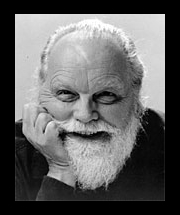
Lou Harrison 1917-2003
Composer Lou Harrison died in Indiana this Sunday. He was on his way to a festival of his music at Ohio State University in Columbus. He was eighty-five years old.
Harrison was born in Portland, Oregon in 1917, and he moved to San Francisco as a young man to study with Henry Cowell. While in San Francisco, he and John Cage formed the world’s first percussion ensemble, and much of his early music was written for junk percussion instruments. In 1943 he went to Los Angeles to study for a year with Arnold Schoenberg. Harrison wrote some twelve-tone music, but by that point he was at least as interested in Cantonese opera, African drumming, and Indonesian Gamelan music as anything in the Western tradition.
Harrison then moved to New York, where he composed and worked as a music and dance critic. He also taught music and conducted, leading the premiere of Charles Ives’ Third Symphony in 1946. In 1953, Harrison returned to California, where he devoted more of his attention to music from various parts of Asia. In 1961 and 1962, he visited Korea, Japan and Taiwan to study instruments indigenous to those areas. In the 1970s, he began seriously studying Indonesian Gamelan music, and many of his works from this period include the gamelan, often alongside Western instruments. With his life partner William Colvig, he also built two gamelan of his own. Many of his later works were for Western ensembles, but he continued to explore tuning patterns from outside the classical tradition. Harrison was also a painter, calligrapher and poet. He leaves behind over sixty years’ worth of beautiful music and writing.
By Charlie Wilmoth
|





 View all articles by Charlie Wilmoth